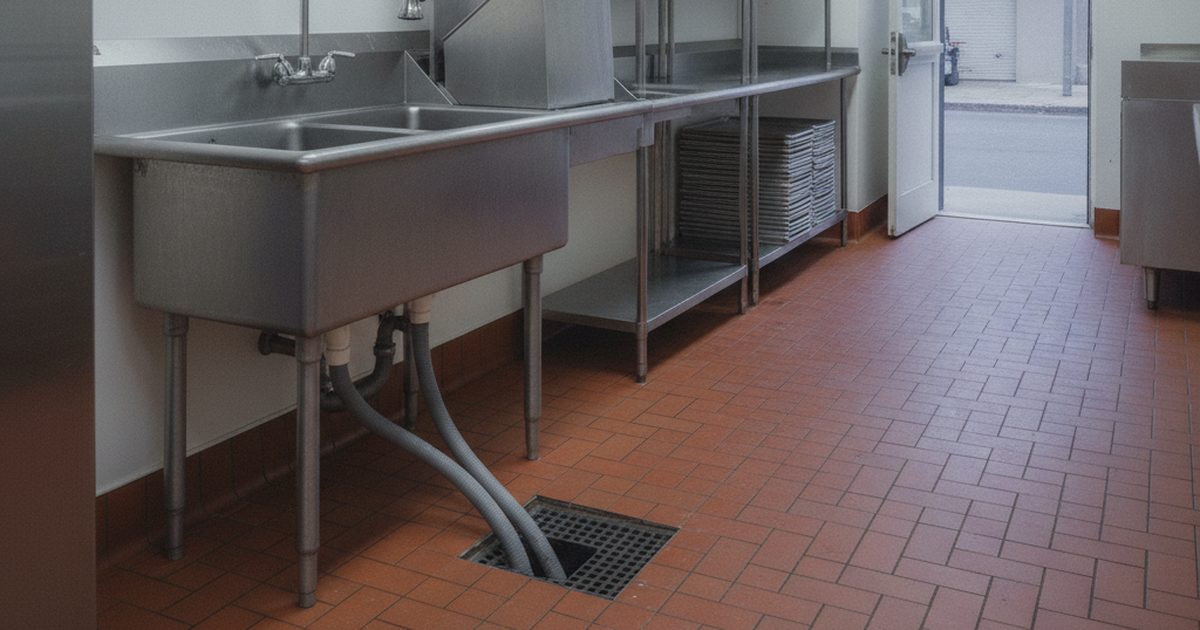
Get that decision right during a build-out or a takeover and the grease device is routine maintenance. Get it wrong and it becomes a concrete-cutting job in a kitchen that is already open.
Why Hollister Watches Kitchen Grease
The City's 2017 Sewer System Management Plan, prepared to meet the State Water Resources Control Board's sanitary sewer requirements, says "the City of Hollister has over one hundred food service establishments (FSEs) within its jurisdiction" and that fats, oils and grease (FOG) have "been identified as a historical cause of Sanitary Sewer Overflows (SSOs) and maintenance issues."
The City's sewer code, as reproduced in that plan, prohibits discharging water or waste "containing fats, wax, grease or oils, whether emulsified or not, in excess of one hundred (100) milligrams per liter." A working grease trap or interceptor is the main way a commercial kitchen keeps its grease out of the public sewer.
Grease Trap or Grease Interceptor?
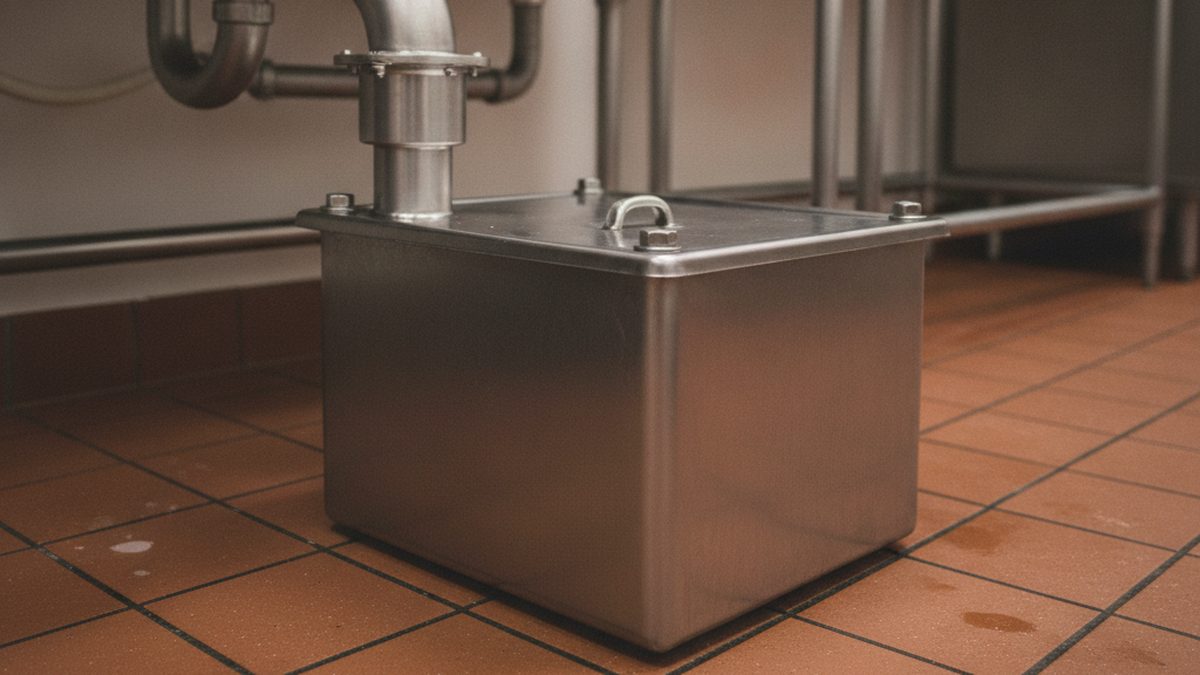
The two terms get used interchangeably, but they describe different equipment:
- A grease trap is a smaller unit, usually installed indoors close to the sink or fixture it serves.
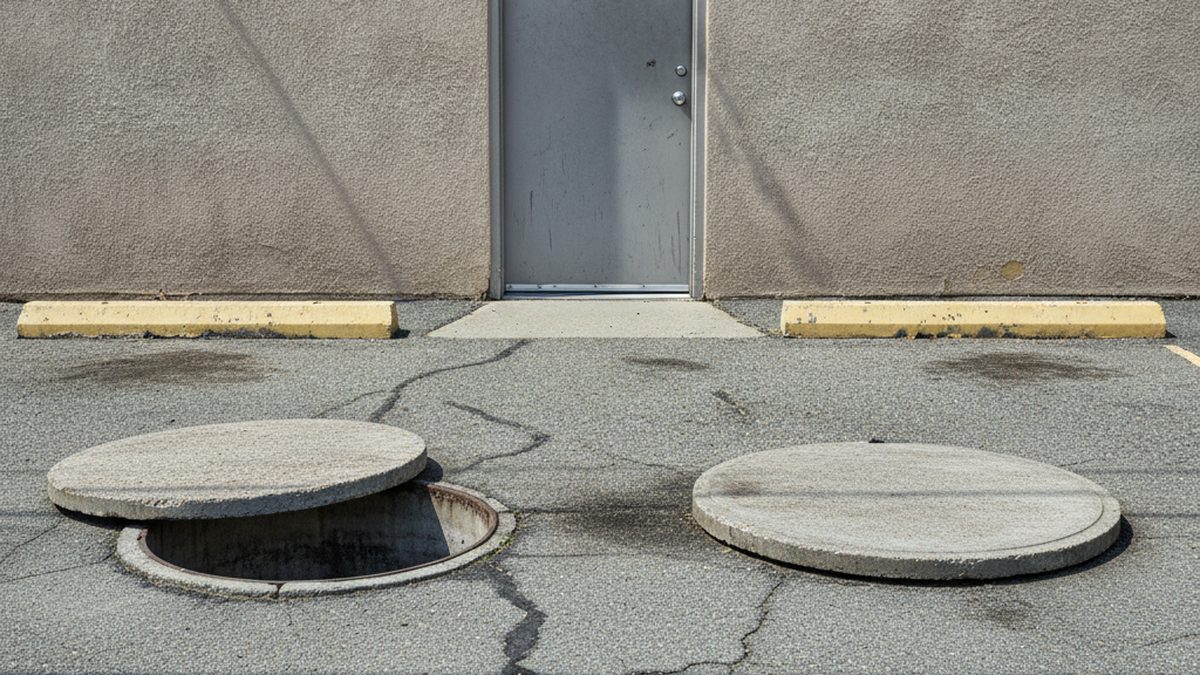
- A grease interceptor is a much larger tank, usually buried outside the building with access lids at ground level, that can serve a whole kitchen.
According to the City's plan, "The current UPC is utilized to determine the type and size of unit that will be required," referring to the Uniform Plumbing Code that California's Plumbing Code is based on. The choice between a trap and an interceptor "will be based upon foods served and prepared, number of drains found within the facility, size and history of the establishment," and the City may run dye tests to confirm where a kitchen's drains actually go.
A coffee counter that warms pastries and a kitchen running a flat-top and fryers all day will not get the same answer, which is why sizing starts with the menu and the drain layout.
What the City's Grease Program Checks
The 2017 plan lays out a permit-based program. Food service businesses that can discharge grease receive a FOG Discharge Permit, which requires them to "follow all Best Management Practices (BMPs), maintain and operate a Grease Control Device and maintain a cleaning log on the premises." Under the plan:
- Permitted kitchens are inspected twice a year, and the cleaning log is reviewed at each inspection.
- Kitchens that do not produce grease in quantities that affect the sewer can receive a Variance Permit, with a yearly inspection to confirm the facility or menu has not changed enough to need a standard permit and a grease device.
- FOG permits are non-transferable and are re-issued annually after the City checks for facility changes.
- Cleaning frequency is set case by case, and licensed haulers must take the grease to a certified disposal facility.
The plan describes the program as it was being set up in 2017, so confirm the current process with the City before you buy, build or change your menu.
Three Situations That Trigger Grease Work
Buying an existing restaurant. Under the plan, the FOG permit does not transfer with the business. Before closing, find out whether the kitchen has a trap or an interceptor, where it is, and when it was last cleaned.
Changing the menu. Adding fryers or a grill line to a kitchen that used to reheat and assemble is exactly the kind of change the yearly variance inspection is meant to catch.
Converting a retail space. A tenant improvement that turns a shop into a food business may need a grease device where none exists, plus new drain lines to reach it.
In every case, access matters as much as size. The City's code requires interceptors to "be located so as to be readily and easily accessible for cleaning and inspection." An interceptor that has been paved over, blocked by a walk-in cooler or buried under landscaping is a problem even if it still works.
The Line Past the Interceptor Still Needs Care
Pumping an interceptor empties the tank. It does nothing for grease already coating the drain line between the kitchen fixtures and the device. On lines carrying kitchen waste, hydro jetting scours the pipe wall instead of punching a hole through the buildup, as we explained in hydro jetting vs. snaking.
Planning a Restaurant Build or Takeover in Hollister
For questions about the grease program and sewer requirements, the City lists its Utilities Division on (831) 636-4377 and its Engineering Department, Wastewater Treatment Division, on (831) 636-4340.
DAE Plumbing installs commercial plumbing for restaurant and food service projects in Hollister and across San Benito County, including grease interceptor sizing and installation. We are a family-owned, licensed contractor, and estimates are free. Call (831) 801-1079 or contact us with your plan set.
---
Sources, verified September 16, 2026: City of Hollister, Sewer System Management Plan, Element 7: Fats, Oils, and Grease Control Program (January 2017, including Municipal Code sections 13.04.100 and 13.04.120 as reproduced there); City of Hollister, Sewer.