The rest of this post covers the signs that point to a failing line, how to confirm a leak before anyone digs, and what a replacement involves, so you know what you are agreeing to when you get a quote.
Which Part of the Line Is Yours
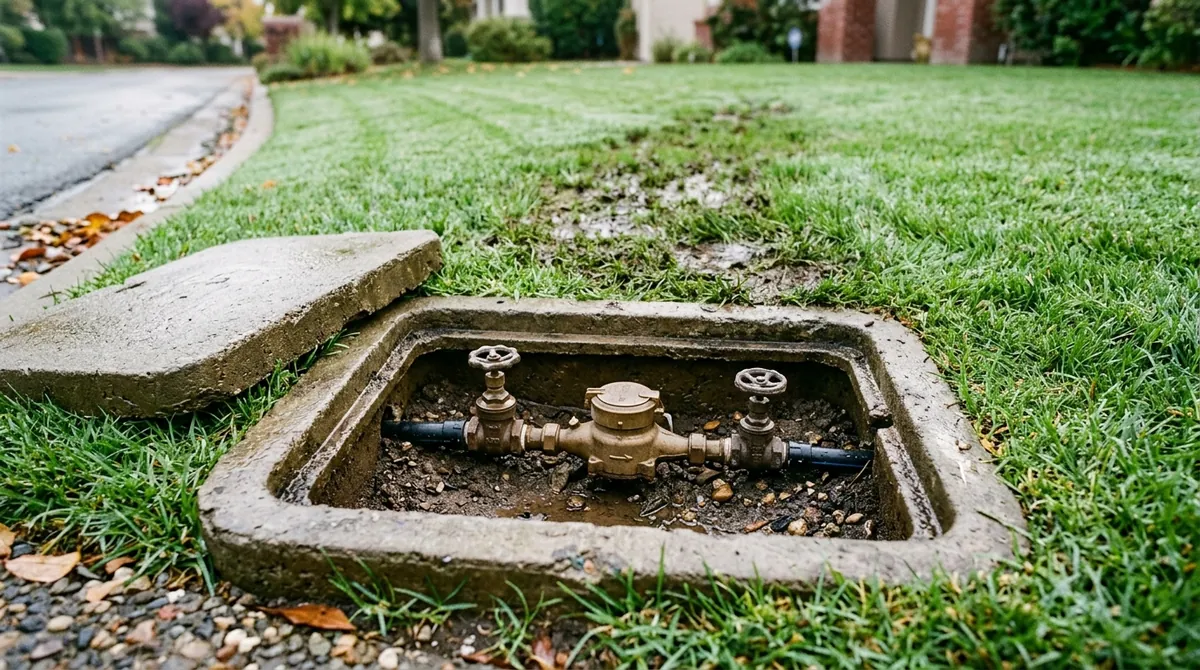
In general, the water provider looks after the pipe up to the meter, and the line from the customer side of the meter to the house is the property owner's to maintain. If you are not sure where that line falls on your lot, your water provider can tell you. In the meter box you will usually find two valves: the provider's valve on the street side of the meter and your valve on the house side.
Sunnyslope County Water District, which serves the east side of Hollister, says this in its customer information sheet: in an emergency you may turn the water off "by using your valve on your side of the water meter only or your valve on the outside of your home." The same sheet asks customers not to plant trees, shrubs or vines around the meter box. Roots are one of the things that crush and crack service lines, so that advice protects your pipe as well as their meter.
Signs Your Main Water Line Is Failing
A buried water line fails out of sight, but it leaves clues on the surface and inside the house.
- A wet or unusually green patch in the yard along the path from the meter to the house, one that stays soft when the rest of the lawn is dry. - A water bill that jumps without any change in how you use water. - Water pressure that has dropped across the whole house, not just at one faucet. - Rusty or discolored water when you first open a cold tap, which can mean an old galvanized service is corroding from the inside. - The sound of running water near where the line enters the house when every fixture is off. - A leak that was repaired before and has come back somewhere else on the same line.
One sign on its own can have other causes. Low pressure at a single fixture is usually a clogged aerator. Two or three together, especially a wet yard and a moving meter, point to the service line.
Confirm the Leak at the Meter First
Before anyone digs, the leak should be confirmed and located. The simplest test is free and takes a couple of hours.
1. Turn off every fixture and water-using appliance, including irrigation and the ice maker. 2. Look at the meter's low-flow indicator, the small triangle or star on the dial. If it is turning, water is moving somewhere. 3. Close the main shut-off valve where the line enters the house and look at the meter again.
If the meter stops when the house valve is closed, the leak is inside the house: a running toilet, a dripping fixture or a pipe in a wall. If it keeps moving with the house valve closed, the leak is on the buried line between the meter and the house. Our guide to finding your main water shut-off valve shows where to look.
From there, a plumber narrows down where on the line the water is escaping, so the excavation is in the right place.
Repair or Replace the Whole Line
Not every leak means a new line. We look at three things.
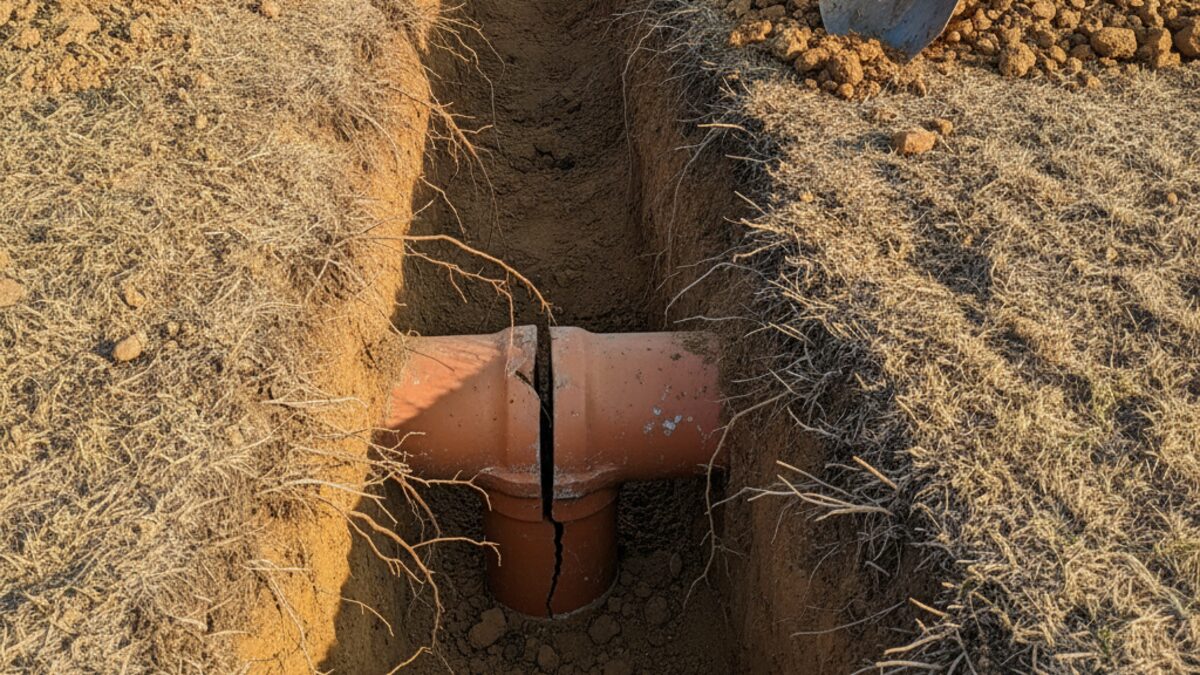
The pipe material and age. Many older homes around downtown Hollister, San Juan Bautista and Watsonville still have their original galvanized steel water service. Galvanized pipe corrodes from the inside, so a leak in one spot usually means the rest of the line is thin too. Fixing one section of it tends to move the next leak a few feet along. Copper and modern plastic lines in good condition are much more likely to be worth a spot repair.
The cause of the leak. A line cracked by a tree root, a fence post or a shovel can be repaired at that point if the pipe on either side is sound. A line failing from age is a replacement.
How much of the line would need opening. A repair at one fitting is a small dig. Two or three repairs along the same run cost more in digging and restoration than a new line would.
What the Replacement Job Involves
A main water line replacement follows the same steps on most properties.
Locating buried utilities. Nobody digs until the utilities are marked. In Northern California that is done through USA North 811, which states that "all excavation requests require a minimum of two working days' notice prior to the start of excavation." The service is free.
Planning the route. The new line usually follows the old one, from the customer side of the meter to the house shut-off. Sometimes a straighter path, or one that avoids a tree or a driveway, makes more sense, and we will talk through the options with you.
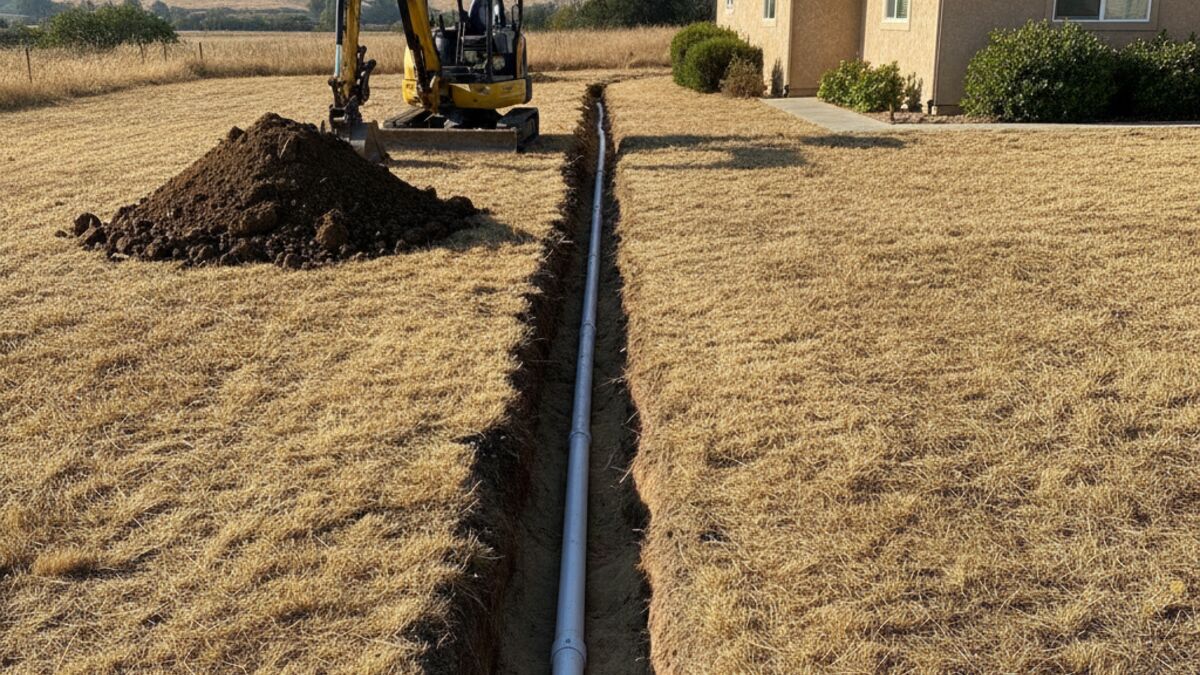
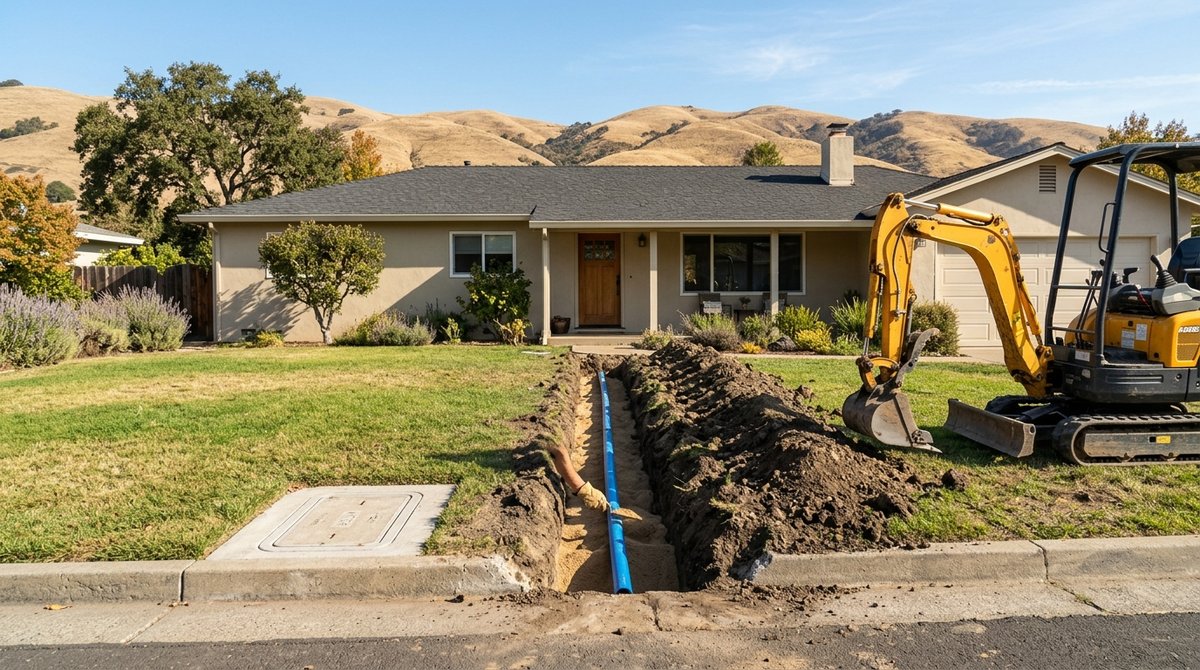
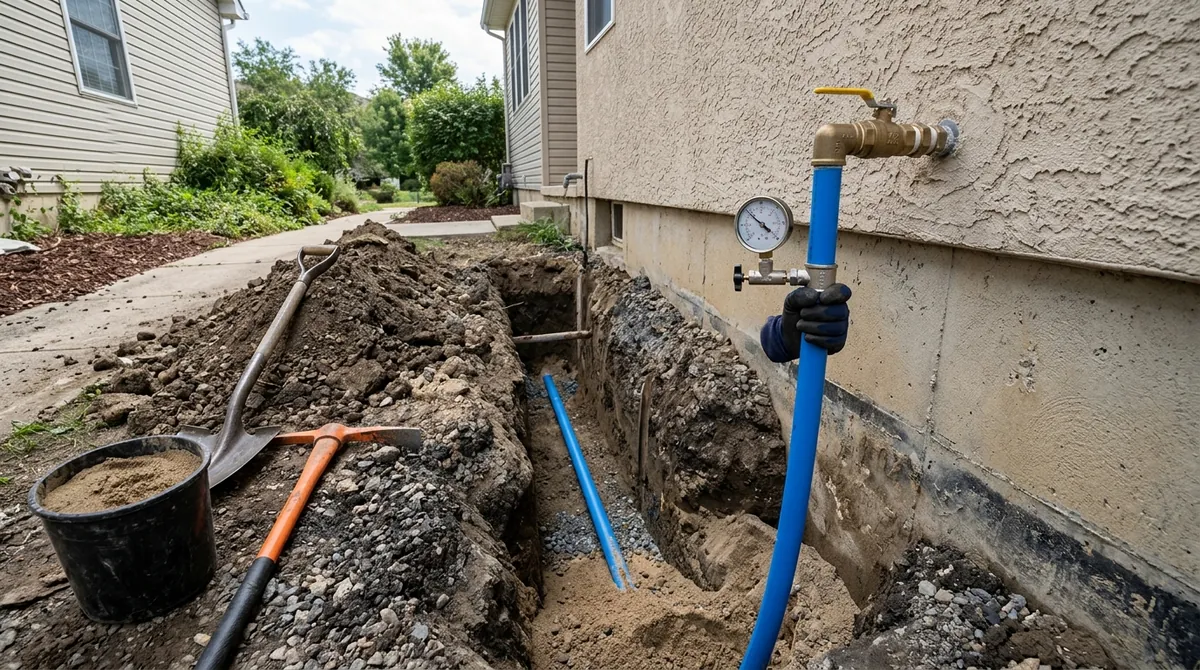
Excavating the trench. We dig with our own excavation equipment. The trench has to be deep enough to protect the pipe and wide enough to bed it properly.
Laying the new pipe. The new service goes in as one continuous run where possible, with fewer joints to fail, and connects to the customer side of the meter and to the house.
Testing before backfill. The new line is pressure tested and checked for leaks while the trench is still open. Where a permit applies, the inspection happens at this stage too.
Backfill and restoration. The trench is backfilled and compacted, and the surface put back. Lawn and soil are straightforward. Concrete, pavers and established plantings take more work, and that is worth discussing before the job starts.
What Drives the Cost
We don't publish a flat price for a main water line replacement, because the length, depth and surface on top change it more than the pipe does. The biggest factors are:
- Length of the run from the meter to the house - What is on top: lawn and dirt cost the least to open and restore; driveways, walkways and hardscape cost the most - Obstacles such as tree roots, other buried utilities and tight access along the side of a house - What the house connection needs, such as a new main shut-off valve or a pressure regulator if the street pressure is high
A written estimate should show the route, the pipe type, the testing and the restoration, so you can compare quotes on the same work.
Main Water Line Replacement in Hollister
DAE Plumbing, Inc. is a family-owned, licensed and insured plumbing contractor (CA Lic. #1047507) with more than 20 years of experience, based on El Toro Drive in Hollister. We find the failure before we dig, use our own excavation equipment, and test the new line before it is covered. If you have a wet patch in the yard or a meter that will not stop moving, tell us what you are seeing. Learn more about our underground plumbing repair service, or read about sewer line repair or replacement if the problem is on the drain side. Estimates are free.
Sources, verified October 28, 2026: Sunnyslope County Water District, Customer Information sheet; USA North 811, usanorth811.org.