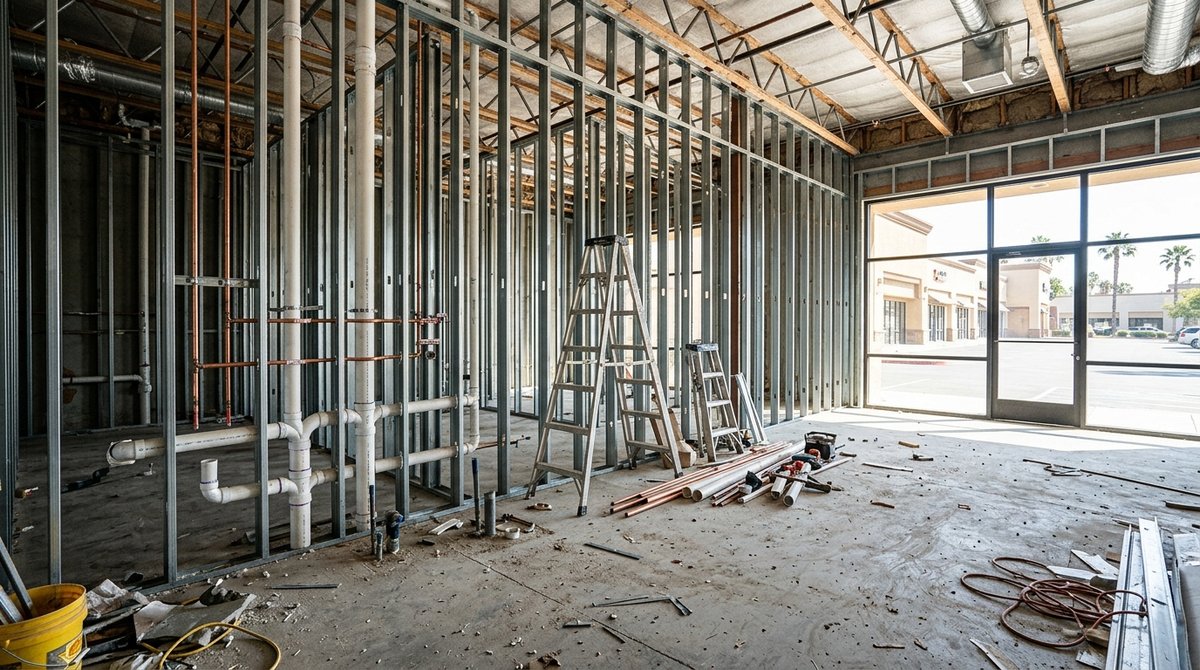
Commercial plumbing is a different job from fixing a leak at home. The checks below are the ones property owners, tenants and general contractors on the Central Coast should run before signing.
Start With the License Classification
In California, plumbing is its own licensed specialty. The Contractors State License Board defines the C-36 plumbing contractor as one who "provides a means for a supply of safe water, ample in volume and of suitable temperature for the purpose intended and the proper disposal of fluid waste from the premises in all structures and fixed works" (CSLB, C-36 Plumbing Contractor). The same classification covers gas piping, water heating equipment and backflow preventers. Those all come up on commercial jobs.
Before you compare prices, look the license number up on the CSLB site. Check that it is active, that the name matches the company bidding, and that workers' compensation insurance is on file if the contractor sends a crew. A general building contractor can manage your project, but the plumbing scope should go to a firm that holds the plumbing classification.
Ask for a Bid Built From the Plans
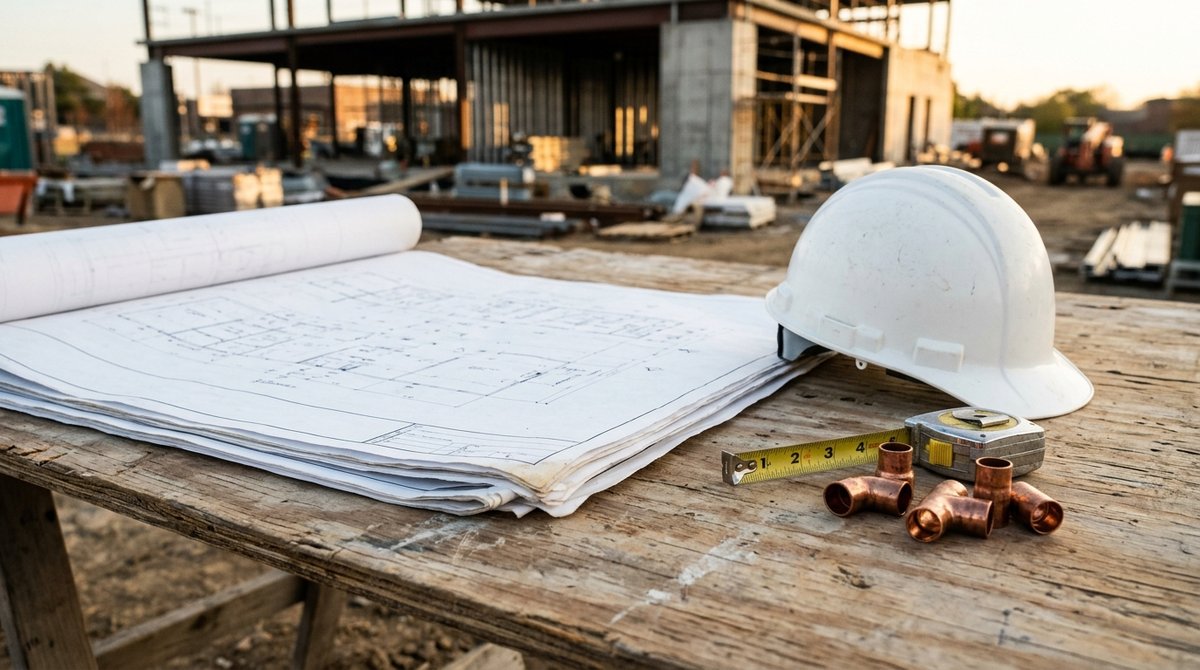
A commercial bid should come from the mechanical plans and fixture schedule. A quick look around the space is not enough. Expect a serious contractor to ask for:
- the plan set, including plumbing and mechanical sheets
- the fixture and equipment schedule, especially for food service
- the construction schedule, with slab, framing and inspection dates
- what the existing building already has: drain sizes, water service size and gas capacity
The bid should be itemized: underground, rough-in, gas, equipment setting, trim, and permits and inspections. A one-line lump sum hides the allowances that turn into change orders later. A contractor who flags conflicts in the plans before pricing them is usually the one who saves you money once work starts.
Match Their Experience to Your Building
"Commercial" covers a lot of ground. A restaurant needs a properly sized grease interceptor, indirect waste for food equipment, high-demand water for dish and prep areas and gas piping for the cooking line. A tenant improvement in an older retail building often comes down to what the existing drains can carry. Multi-unit housing is about repeating the same stack cleanly, unit after unit, on a tight schedule.
Ask each bidder for two or three projects like yours and what went wrong on them. Ask who on their crew will actually be on site. If you are opening a food business, our guide to grease interceptors for Hollister restaurants covers what the city checks.
Permits, Inspections and the Schedule
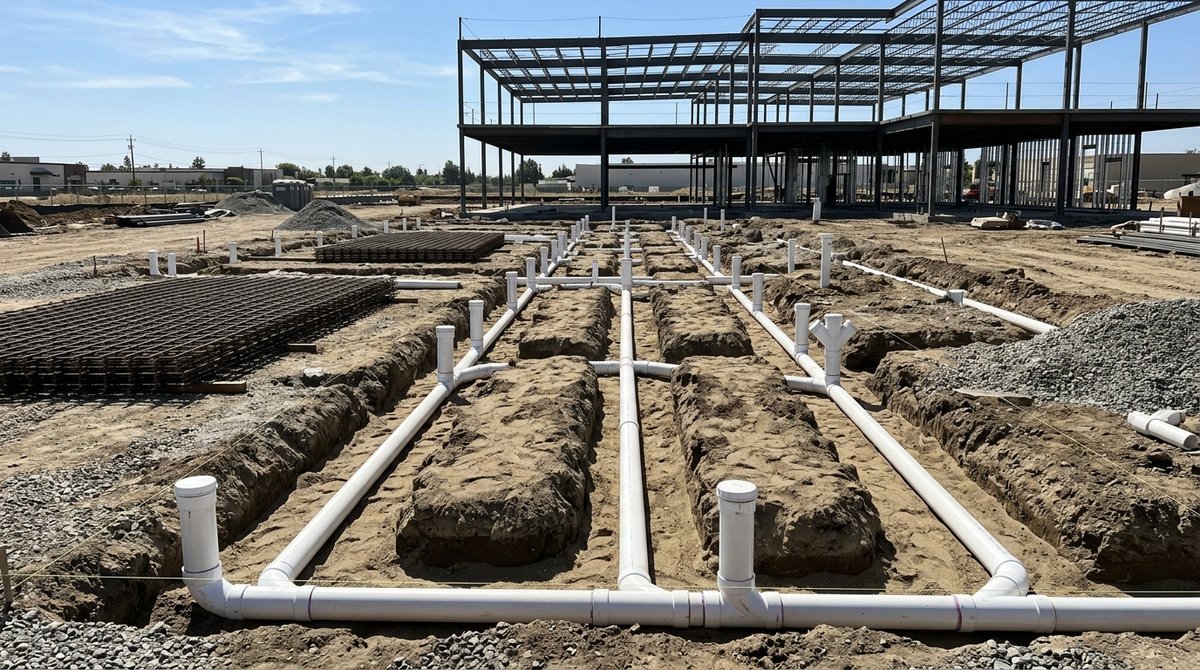
On commercial work, the plumbing runs in phases. Underground drainage is trenched, laid, tested and inspected before the slab is poured. Rough-in follows framing, and fixtures and equipment go in as finishes close out. Each phase waits on an inspection. A contractor who misses one inspection can hold up every trade behind them.
Ask who pulls the plumbing permit, who schedules and attends the inspections, and how the crew handles a failed inspection. Also ask how they test lines before walls close and whether they will camera the existing sewer line on a tenant improvement before tying into it. An old lateral under a building that changes use is a common surprise.
Local Knowledge Across the Central Coast
Our service area spans several building departments and sanitation districts: Hollister and San Benito County, Gilroy and Morgan Hill, Salinas and Monterey, Watsonville and Santa Cruz, and San Jose. Each has its own plan check, inspection rhythm and grease rules for food service. A contractor who already works with your city's inspectors knows what they look for before the first visit.
For owners in Santa Cruz County, see our commercial plumbing in Santa Cruz page. For ground-up builds, our new construction plumbing crew handles the underground and rough-in phases with your general contractor.
Questions to Ask Before You Sign
- What is your CSLB license number, and is it in the C-36 plumbing classification?
- Can I see your certificates of insurance?
- Is this bid based on the current plan set, and what does it exclude?
- Who pulls the permit and attends each inspection?
- How do you price changes once work starts?
- What similar projects have you done in this city?
Getting a Commercial Bid in Hollister and Area
DAE Plumbing, Inc. is a family-owned, licensed and insured plumbing contractor (CA Lic. #1047507) based in Hollister, with more than 20 years of experience. We bid commercial work from your plans and coordinate directly with general contractors. Our commercial plumbing contractors handle restaurants, tenant improvements and multi-unit projects across the Central Coast, and every estimate is free. Send us your plan set and schedule and we will price the full plumbing scope.