
Find both this week, not during a leak: a burst supply line keeps running at full pressure until one of them is closed.
Where the Main Shut-Off Usually Is in a Hollister Home
Most guides start in the basement. If your house does not have one, start outside.
- Find the meter box. It is a concrete box with a lid, usually near the curb or the property line at the front of the lot.
- Face the house from the meter. The service line runs underground from the meter toward the house, usually by the most direct route.
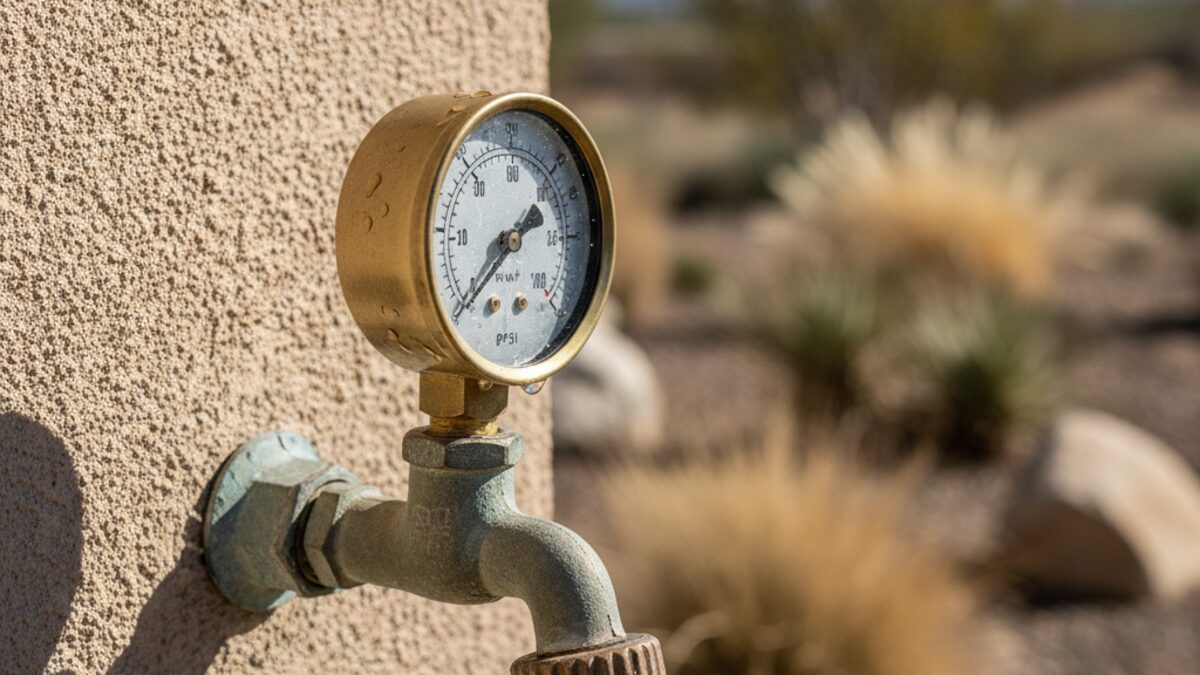
- Walk the wall on that side. Look for a pipe rising out of the ground or out of the slab, often next to a hose bib, with a valve on it before it disappears into the wall. That is the main shut-off.
- If it is not outside, check the garage. On many houses the line comes up inside the garage wall or near the water heater, sometimes behind a small access panel.
The valves under sinks and behind toilets are fixture stops. They are worth knowing about, but they only isolate one fixture. The main valve stops everything.
Ball Valve or Gate Valve: Know Which One You Have

There are two common types, and they close differently.
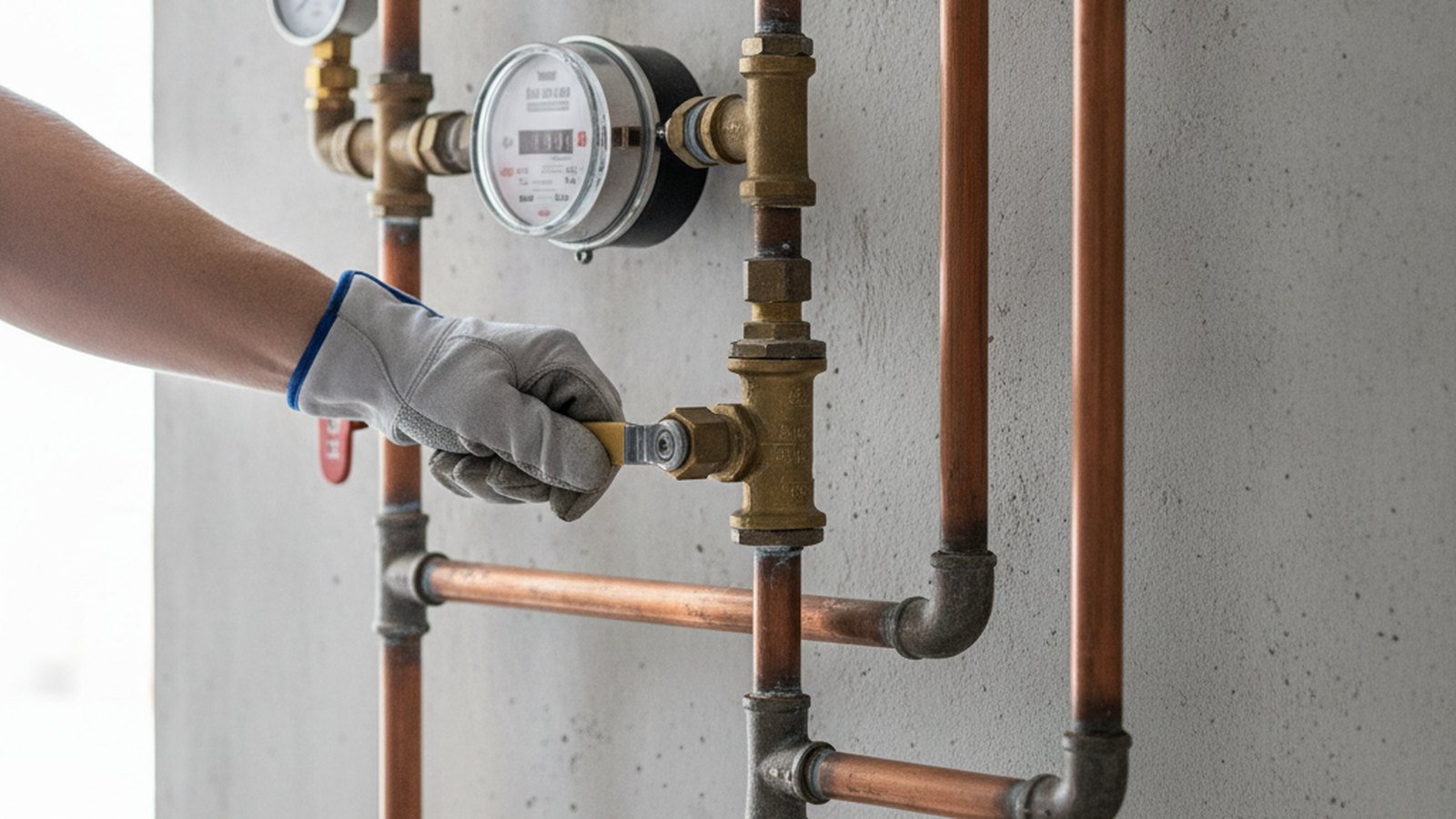
A ball valve has a straight lever handle. A quarter turn closes it: when the lever sits across the pipe, the water is off; when it runs along the pipe, the water is on. It is fast, and you can see its position at a glance.
A gate valve has a round wheel handle. Turn it clockwise, several full turns, until it stops. Common in older houses, they are the type most likely to stick, weep at the stem, or feel closed without fully stopping the flow.
If a valve will not turn by hand, do not put a pipe wrench on it. Forcing an old valve can snap the stem or crack the fitting, and then you have a leak at the one valve that was supposed to stop leaks.
The Valve in the Meter Box, and the One to Leave Alone

The meter box usually contains two valves: the water provider's valve on the street side of the meter, and a customer valve on the house side. Only the customer side is yours to operate.
Sunnyslope County Water District, which its own service-area page says "generally provides water service for residences on the eastern side of Hollister and some surrounding portions of unincorporated San Benito County," puts it plainly in its customer information sheet. In an emergency, it says, you may turn the water off "by using your valve on your side of the water meter only or your valve on the outside of your home." If you cannot find either, the district asks you to call its office on (831) 637-4670, and "we'll send a serviceman to show you their location and how to shut them off."
If the City of Hollister supplies your water, call the City's Utilities line on (831) 636-4377, or (831) 636-4100 outside business hours, if you cannot locate or operate your valve.
Why Hollister Valves Seize, and How to Keep Yours Working

The main valve most people finally find during an emergency is one nobody has touched in years. In San Benito County that matters more than it would elsewhere, because hard water is one of the main reasons local shutoff valves seize: mineral scale builds up around the gate or ball until the valve will not move.
Sunnyslope's advice is simple and worth following whoever supplies your water: "exercise the valve every couple of months by turning the valve off and on again." Close it fully, open it fully, and check that nothing drips from the stem afterward.
If your main valve will not move, will not fully close, or weeps at the handle once it has been turned, it is due for replacement. A brass quarter-turn ball valve is the usual upgrade, and it is a routine job for our plumbing repairs and service team.
Use the Main Valve to Find Hidden Leaks
Knowing where your main valve is also gives you a free leak test. The U.S. Environmental Protection Agency's WaterSense program estimates that "the average household's leaks can account for more than 9,300 gallons of water wasted every year," and that "nine percent of homes have leaks that waste 50 gallons or more per day."
The EPA's own test is simple: "Check your water meter before and after a two-hour period when no water is being used. If the meter changes at all, you probably have a leak."
You can take that one step further with the main valve. If the meter moves with every tap off, close the main shut-off at the house and watch the meter again. If it stops, the leak is inside the house: a running toilet, a dripping fixture, or a line in a wall. If it keeps moving with the house valve closed, the leak is probably on the service line between the meter and the house, underground, and that calls for a plumber.
A Five-Minute Job Worth Doing This Weekend
- Find the main shut-off and the customer valve in the meter box.
- Tag the main valve with bright tape so anyone in the house can find it.
- Close it and open it once to confirm it moves freely.
- Show everyone who lives there, including teenagers and anyone who house-sits.
- Clear any plants or clutter away from the meter box lid.
If the valve is seized, leaking, or simply impossible to find, DAE Plumbing can locate it, replace it with a quarter-turn valve, or fit an automatic leak-detection shut-off that closes the supply for you when it senses abnormal flow. We are a family-owned, licensed Hollister plumber serving San Benito County since 2018. Call (831) 801-1079 or get in touch for a free estimate.
---
Sources, verified September 12, 2026: U.S. EPA WaterSense, Fix a Leak Week; Sunnyslope County Water District, Customer Information sheet (revised August 29, 2024) and Service Areas.