This guide covers new lines: a sewer lateral for a new home, an accessory dwelling unit, a detached shop, or a full replacement where the old line is abandoned and a new one is run. If your existing line is cracked or backing up and you want to know whether it can be repaired, see our underground plumbing repair page instead.
Who Owns the Sewer Line
In Hollister, the private sewer lateral belongs to the property owner. The City of Hollister's Sewer System Management Plan states that the city "does not own and therefore does not require access to maintain or repair any portion of a Lateral Sewer, House Sewer or House Drain", and that Municipal Code 13.04.170 makes property owners responsible for their laterals.
In practice that means two things. The owner pays for a new or replacement lateral, and the owner chooses who installs it. It also means the line has to be built to last, because nobody else is going to maintain it.
Step One: Locates and the Permit
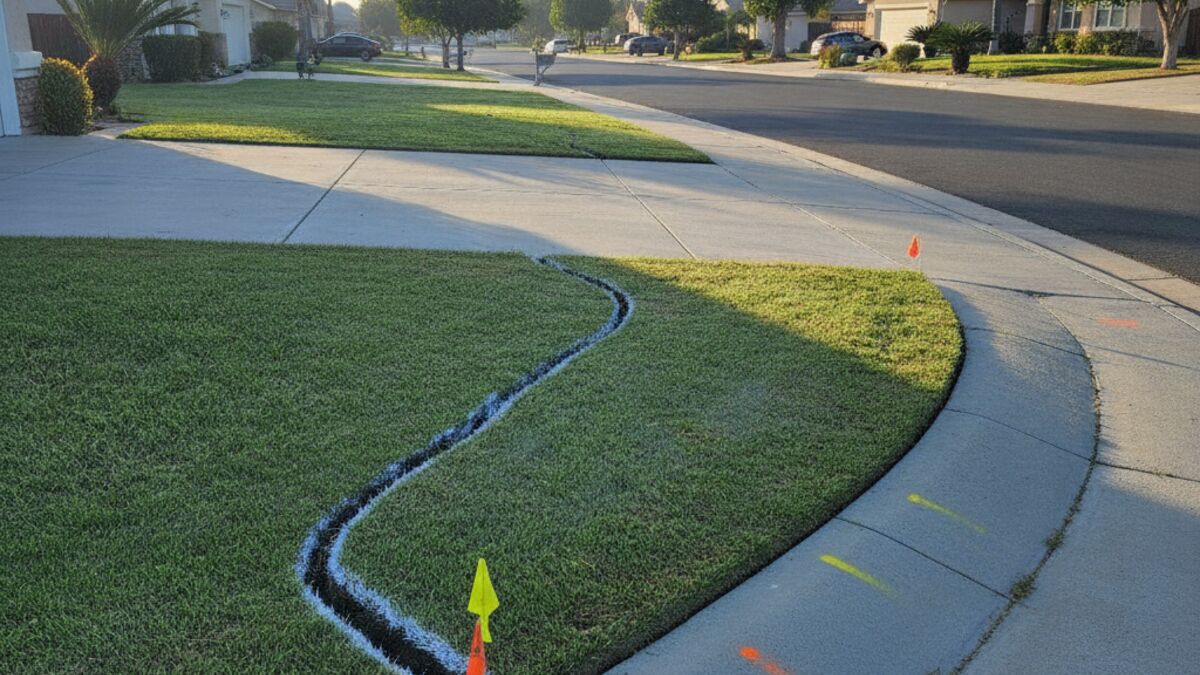
Nobody should dig before the underground utilities are marked. In Northern California that is done through USA North 811, which requires "a minimum of two working days' notice prior to the start of excavation". The service is free. The excavator pre-marks the dig area in white paint, and each utility then marks its own buried lines in its own colour.
While the locates are pending, the permit goes in with the local building department. Hollister, San Benito County, Gilroy and Morgan Hill each run their own departments, so the paperwork and inspection booking differ from town to town even though the plumbing code underneath is the same.
Step Two: The Trench and the Pipe
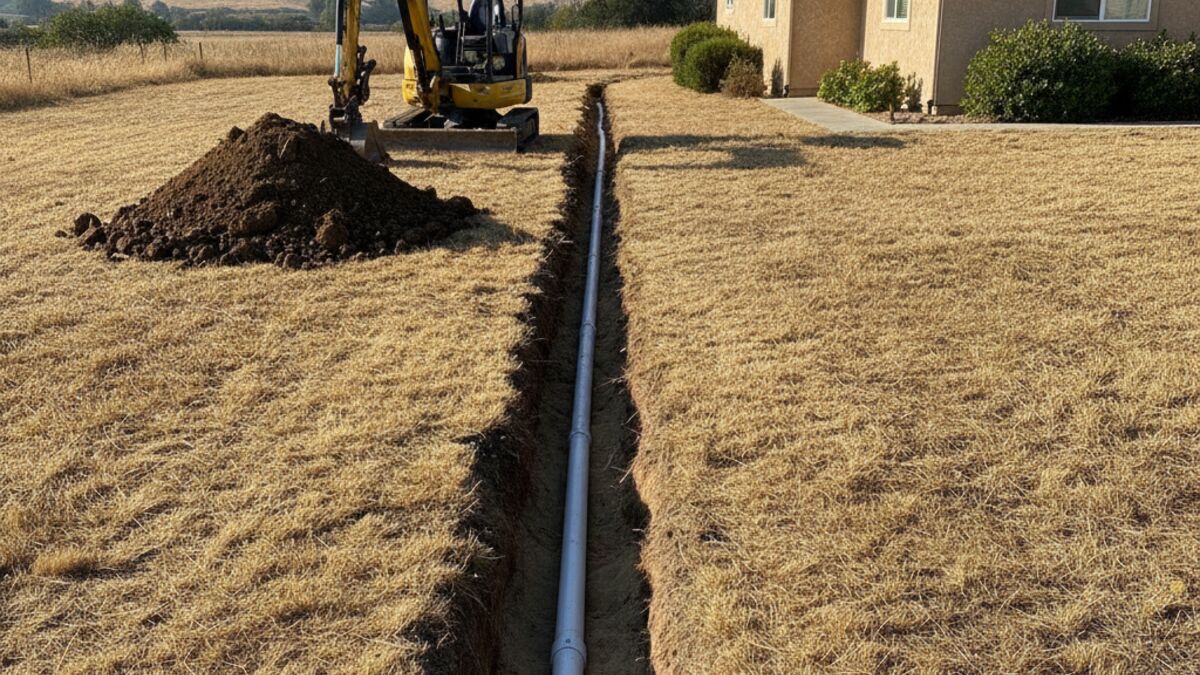
The route is planned for the shortest practical run with as few changes of direction as possible, because every bend is a place where a future blockage can form. The trench is dug to the depth the line needs, and the pipe is laid on a bed of sand or fine material rather than on rocks or clods.
The most important number on any sewer job is the fall. Waste lines rely on gravity, so the pipe has to drop at a steady, code-minimum slope from the house to the connection. Too little fall and solids settle. A dip or belly in the line holds water and debris and becomes the spot that backs up. Getting the grade right over the full length is the core of the job.
Cleanouts are added so the line can be cleaned and inspected later without digging. A cleanout near the house is standard, and longer runs need more.
Step Three: Inspection Before Backfill
Permitted underground work is tested and inspected while the trench is still open. The inspector needs to see the pipe material, the joints, the bedding and the slope. If the trench is filled before the inspection, it has to be dug out again.
That is also the moment to see the new line yourself. Once it is buried, the only way to look at it is with a sewer camera inspection.
Step Four: Backfill and Restoration
Backfill goes in layers and is compacted as it goes. Loose fill settles over the following months and leaves a sunken strip across the yard, or worse, lets the pipe move. Hollister's clay soils swell when wet and shrink when dry, which makes compaction and bedding matter more here than in sandy ground.
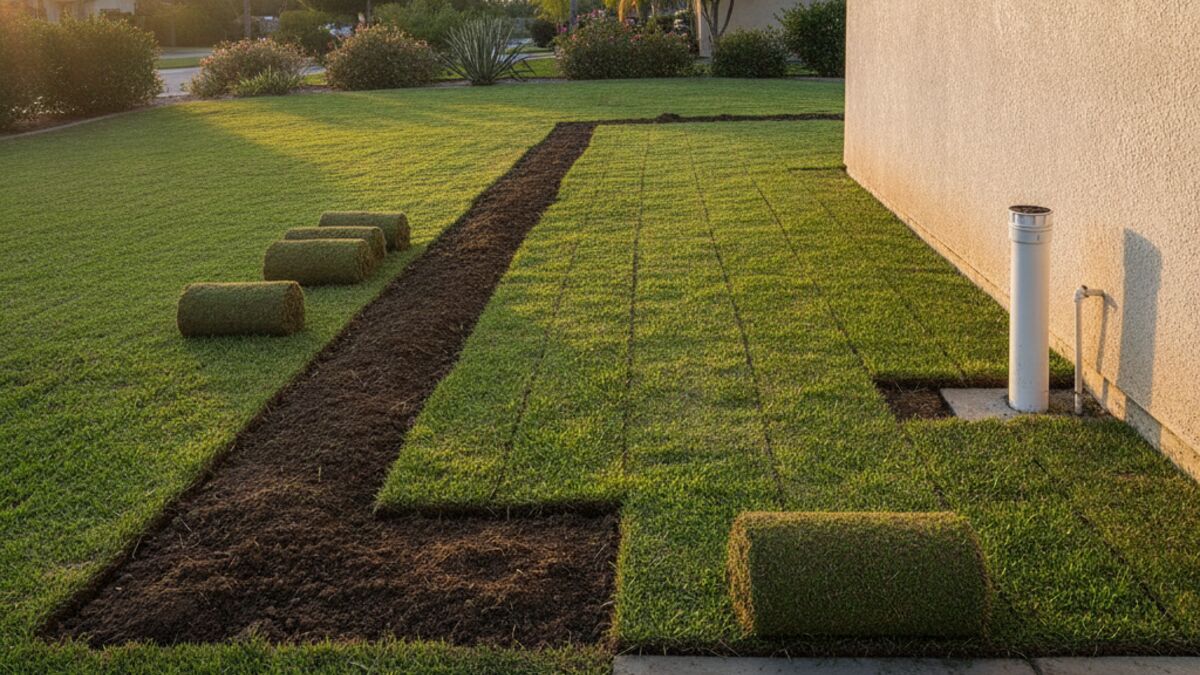
Restoration is where estimates differ most. An open lawn takes new soil and seed or sod. A driveway, patio or walkway has to be saw-cut and re-poured, and mature trees or landscaping along the route can mean a longer path around them.
What Decides the Time and Cost
- Length and depth of the run from the house to the connection point - What is above the route: open lawn, landscaping, concrete or a driveway - Soil: clay, rock or a high water table all slow the trench - Access for the excavator, especially in narrow side yards - The connection: tying into an existing lateral is different from a new tap at the main, which may involve the city or district
Our estimates cover the job from locates through restoration, so you can see where the cost sits before anything is dug. For a sense of how a new line is then looked after, see our guide on how often to clean a main sewer line.
New Builds and ADUs
On a new home or an ADU, the sewer lateral is part of the underground rough-in and goes in before the slab is poured. It is planned alongside the water and gas lines, which is why we like to see the plans early. Our new construction plumbing page covers how that fits into a build schedule.
Getting It Done Once
DAE Plumbing handles underground plumbing installation across Hollister and the Central Coast with our own excavation equipment, including new sewer lines in Gilroy. We are licensed and insured, CA Lic. #1047507, and estimates are free.
Call (831) 801-1079, or (408) 728-2856 for Gilroy, Morgan Hill and San Jose.