
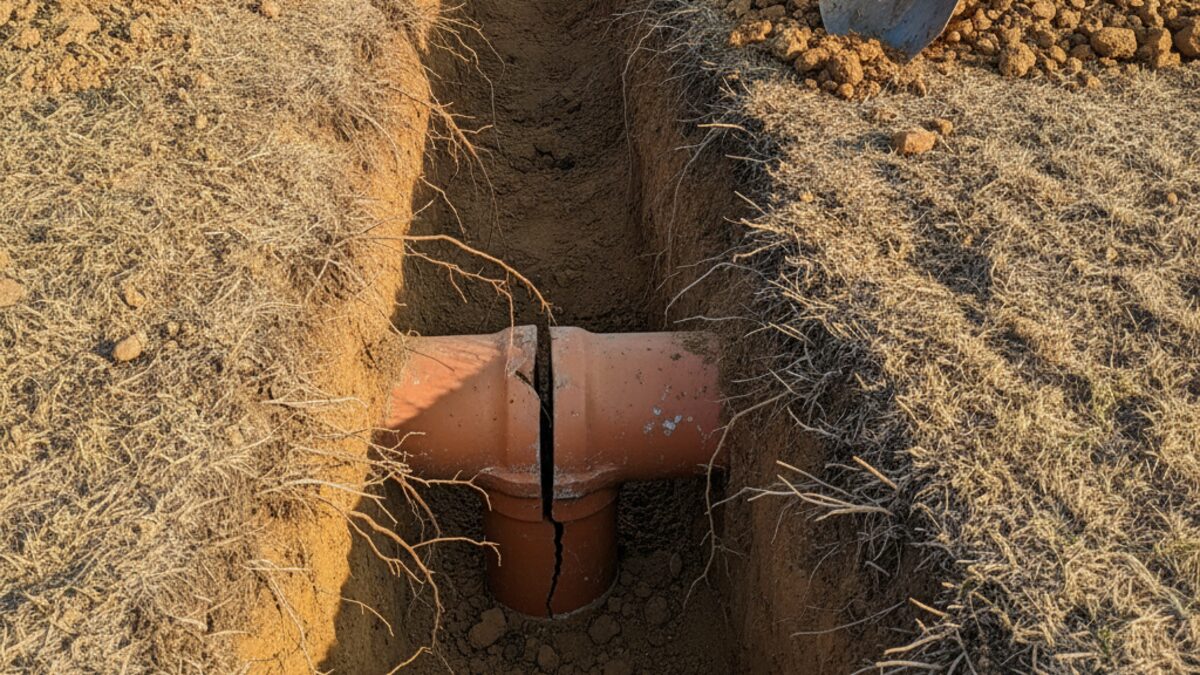
The decision is rarely a judgement call once the line is on camera. Here is what we look at, what each option involves, and what to ask before you agree to either.
Start With a Camera, Not a Shovel
You cannot price a sewer repair from the surface. A camera inspection runs the full length of the lateral and shows the pipe material, every joint, where roots are getting in and whether any section has cracked, separated or sagged. A transmitter in the camera head lets us mark the exact spot and depth on the ground, so if a repair is needed we dig in one place instead of trenching the yard.
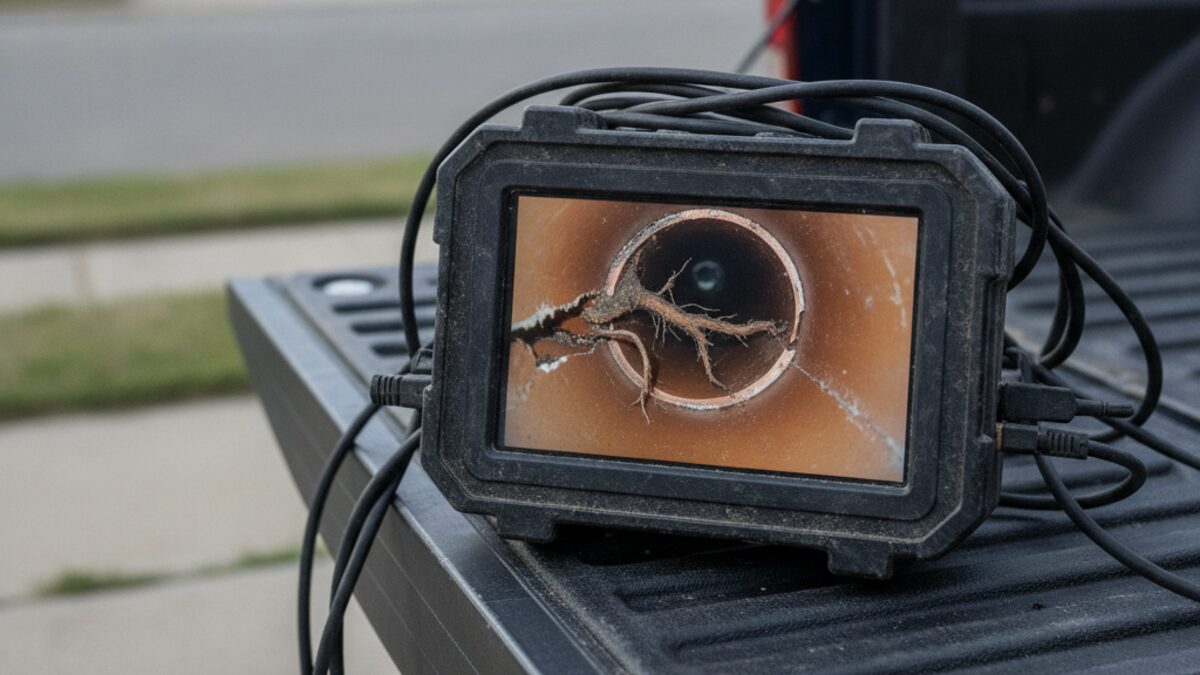
Ask for the footage. A contractor recommending a full replacement should be able to show you why.
When a Spot Repair Makes Sense
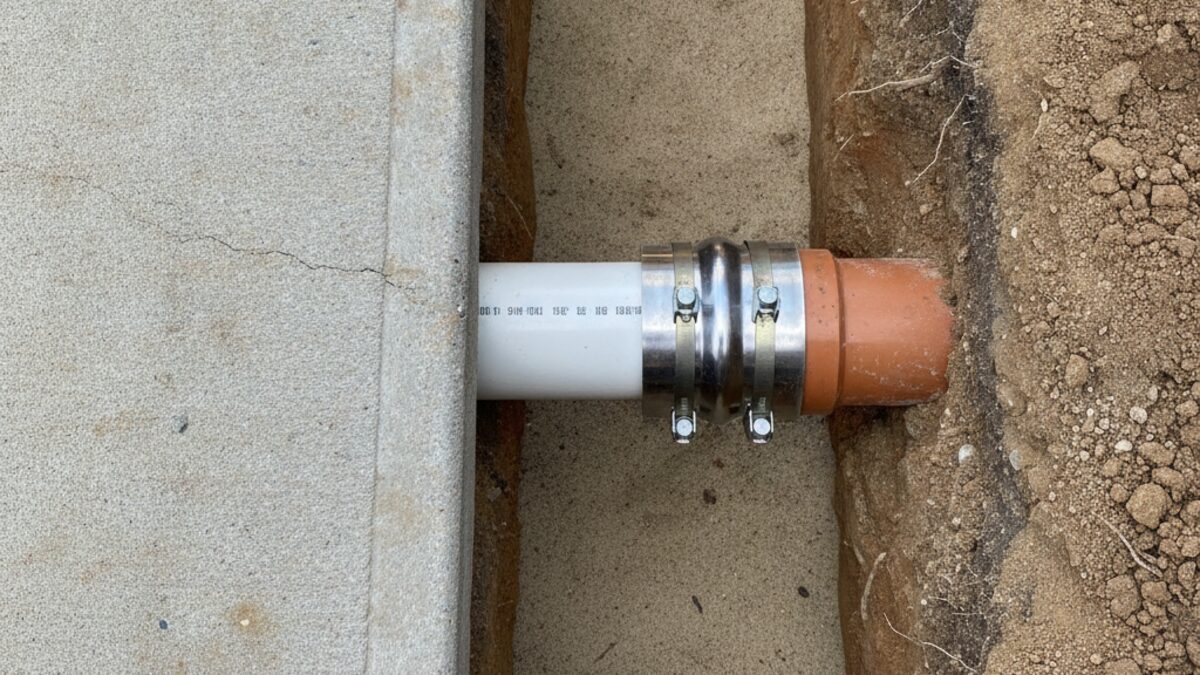
A spot repair cuts out the damaged section and replaces it with new pipe and proper couplings. It is the right call when:
- the failure is in one place, such as a single broken joint or a section crushed by a root or a vehicle - the rest of the line is round, aligned and holding its slope - the pipe material elsewhere is in reasonable condition for its age
A spot repair on a lateral usually takes a day, including excavation, testing and backfill, and costs a fraction of a full replacement.
When Replacement Is the Better Value
Replacement makes sense when the camera shows a pattern rather than a point:
- Roots at many joints. Older clay laterals are laid in short sections, and every joint is a way in for roots. Fixing one leaves the rest. - Cracked, offset or collapsing clay. Once the pipe is breaking in several places, each repair disturbs the sections beside it. - Corroded cast iron. Scaling and pinholes along the bottom of the pipe spread. - Bellies. A sag that holds water and solids keeps clogging until the slope is fixed, which means relaying the pipe. - Repeat calls. If the line has been cleared or patched several times in a few years, the money is better spent once.
Replacing the line also upgrades it to modern pipe, laid on bedding at a steady fall. Our guide to new sewer line installation covers how a replacement runs from locates to backfill.
Who Pays for the Lateral in Hollister
This surprises many owners. The City of Hollister's sewer system management plan states that the City "does not own and therefore does not require access to maintain or repair any portion of a Lateral Sewer, House Sewer or House Drain", and the municipal code makes the property owner responsible for lateral upkeep. In practice, the pipe from your house to the city main is yours to repair, whether the failure is under your lawn or near the street. Other cities in our area set their own rules, so check with your local public works department if you are outside Hollister.
What Changes the Cost of Either Option
Neither option has a fixed price. The main factors are:
- how deep the line is and how long the run to the main
- what sits on top of it: lawn, concrete, a driveway, mature trees
- the pipe material and how many failures the camera finds
- whether a permit and inspection are required for the work
We give you both prices when both make sense, and we show you the camera footage or the exposed pipe before we bury the fix.
Signs It Is Time to Call
A sewer line that is failing usually shows it: backups that clear and come back, gurgling drains, sewage odour outside, unusually green stripes in the lawn, or small sinkholes along the pipe path. If you are seeing a backup right now, our guide on what to do during a sewer backup covers the first steps.
DAE Plumbing provides underground plumbing repair and sewer line replacement across Hollister, Gilroy, Watsonville and the Central Coast, including underground plumbing repair in Santa Cruz. We are licensed and insured, CA Lic. #1047507, and estimates are free.
Call (831) 801-1079, or (408) 728-2856 for Gilroy, Morgan Hill and San Jose.