That is the short answer. The useful part is knowing which of those situations you are in, because two heaters with the same symptom, no hot water, can need very different fixes. Here is what a plumber checks, in the order we check it, before we tell you which way to go.
First Question: Is the Tank Leaking?
Everything else depends on this. Water pooling under the heater can come from four places, and only one of them means the heater is finished.
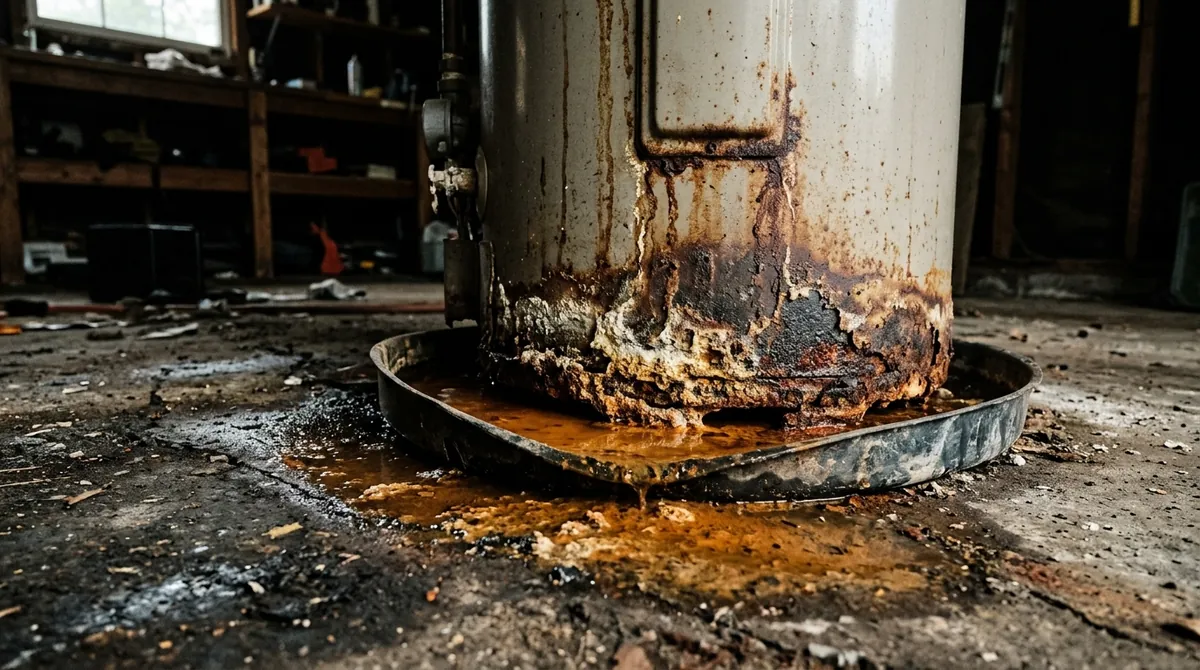
- A fitting on top. The cold inlet, the hot outlet or a supply connector can drip down the side of the tank and collect underneath. Tightening or replacing the connector fixes it. - The temperature and pressure relief valve. A relief valve that drips or discharges is either worn out or doing its job because the pressure is too high. The valve is a replaceable part. High pressure is a separate problem, often a missing or failed thermal expansion tank. - The drain valve. The plastic drain valves on many tanks start to weep with age. It can be replaced. - The tank itself. Once the steel inside rusts through, water seeps from the bottom seam or from under the jacket. There is no repair for a leaking tank. It needs replacing, and sooner rather than later, because a slow seep can turn into a burst.
A dry floor with rust staining at the base, or water that keeps coming back after the fittings are tight, points to the tank. That is the one finding that makes the decision for you.
Repairs That Make Sense on a Sound Tank
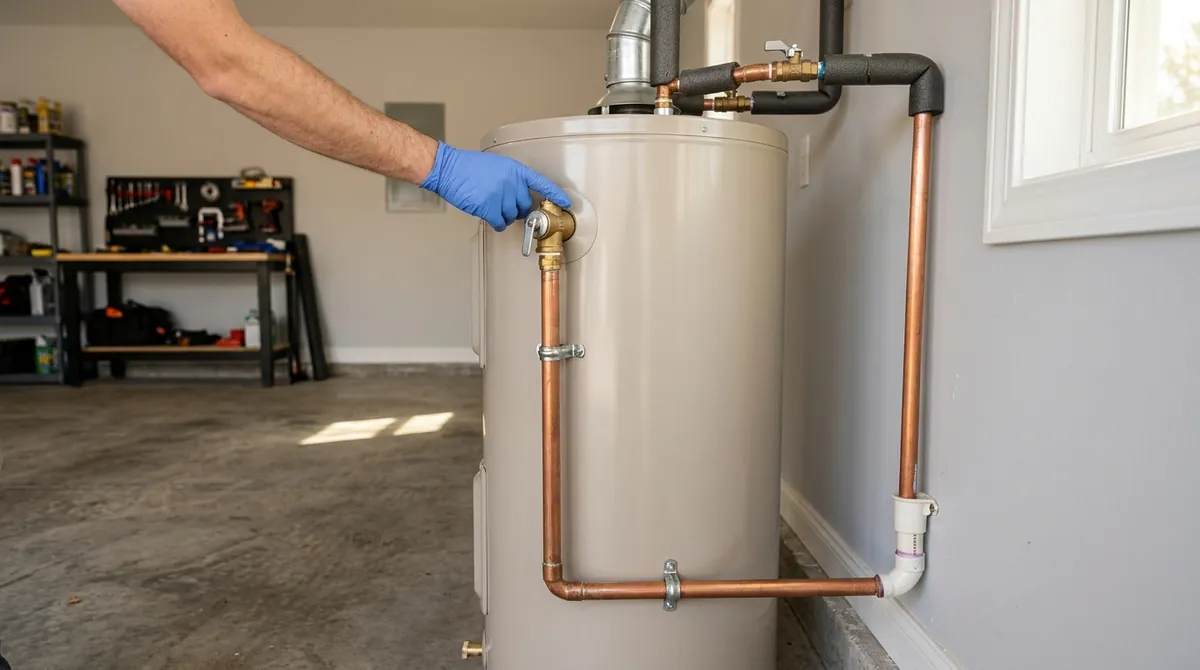
If the tank is dry and the unit is not near the end of its life, most faults are a part.
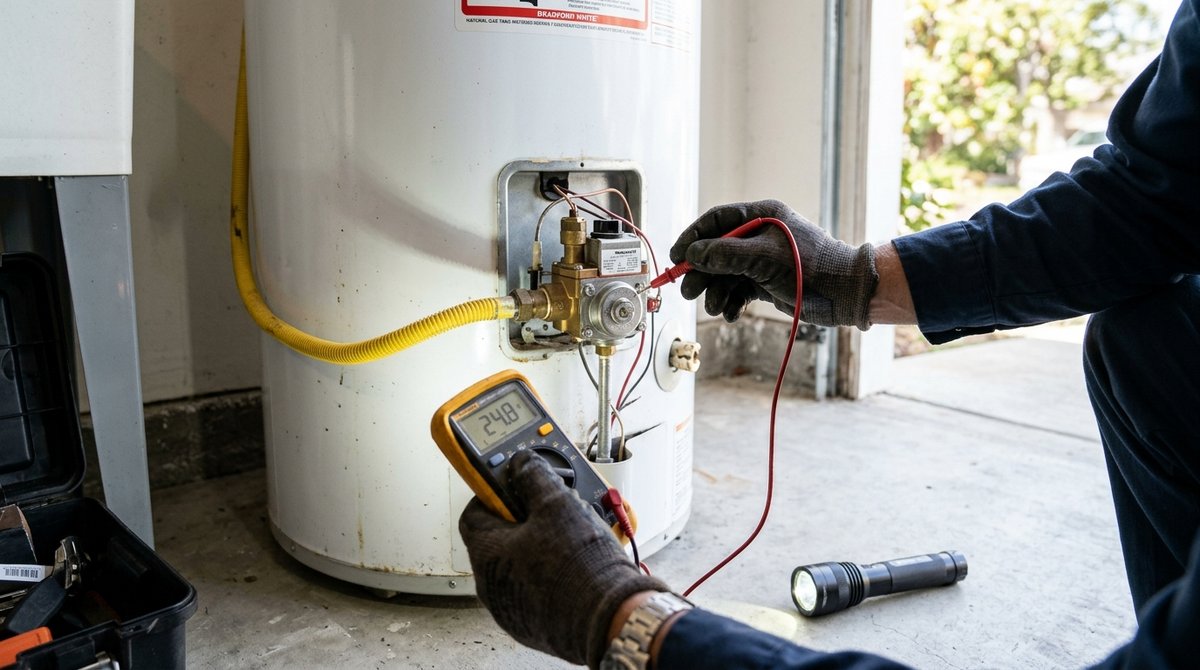
Gas water heaters. No hot water usually traces back to the ignition side: a pilot that will not stay lit, a dirty or failed thermocouple or flame sensor, a worn igniter, or a gas control valve that has failed. A burner that is clogged or burning poorly, or a draft problem in the vent, also shows up as weak heating. These are all repairable, and the cheaper ones are often fixed on the first visit.
Electric water heaters. Lukewarm water or hot water that runs out fast usually means one of the two heating elements or thermostats has failed. Both can be tested and replaced without touching the tank. A tripped high-limit reset is a symptom, so we look for the cause rather than just pressing the button.
Both types. A dip tube that has broken apart sends cold water to the top of the tank and gives you short, lukewarm showers. The anode rod, the sacrificial metal rod that corrodes so the tank does not, can be replaced before it is used up. A sediment-choked tank can sometimes be flushed back to working order if it is caught early.
Why Hollister's Water Changes the Math
The water across the Hollister basin is hard, and that matters for both sides of this decision. Every gallon that is heated drops a little calcium and magnesium as scale. Over years it settles in the bottom of a gas tank, where it makes the burner work harder and you hear it as rumbling or popping, and it coats the elements in an electric tank until they burn out.
So in Hollister, Gilroy and Salinas, an anode rod is usually used up sooner, and sediment builds faster than the label assumes. A heater that has been flushed and had its anode rod checked can be worth repairing at an age when a neglected one is not. If you are not sure what has been done to yours, that is something we look at on the visit. Our guide to protecting your plumbing from hard water covers the treatment side.
When Replacement Is the Better Money
Age is the second filter after the tank. Most tank heaters in hard-water areas like ours give out somewhere between eight and twelve years, so a unit past ten that needs anything more than a small part is usually a candidate for replacement. You can read the manufacture date from the serial number on the label, or we can read it for you.
We weigh three things together:
1. The cost of the repair against the cost of a new unit. A thermocouple on a six-year-old tank is an easy yes. A new gas control valve on a twelve-year-old tank spends real money on a heater that may be leaking next year. 2. What the tank looks like inside and out. Rust at the fittings, a scorched burner area or heavy sediment all shorten the time a repair buys. 3. Whether the heater still fits the house. If the family has grown and the hot water runs out every morning, a repair keeps a heater that is too small. That is the time to talk about a larger tank or a tankless unit.
Our post on the signs you need a water heater replacement goes through the warning signs one by one.
Code Items That Come With a Replacement
Repairs and replacements are treated differently by the city. The City of Hollister Building Division's Water Heater Requirements handout states that "a permit is required for all water heater installations, including replacement units" (City of Hollister, Water Heater Requirements).
The inspector then checks the new installation against the current code, not the one in force when the old heater went in. On older installs that often means adding items the old unit never had:
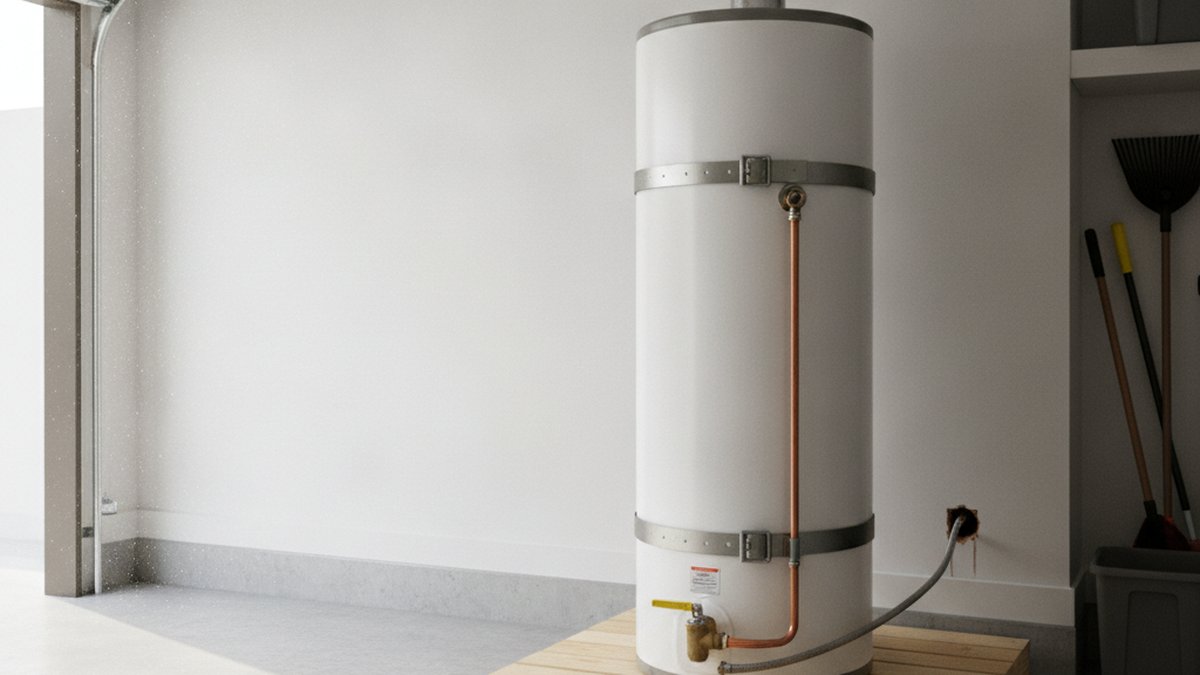
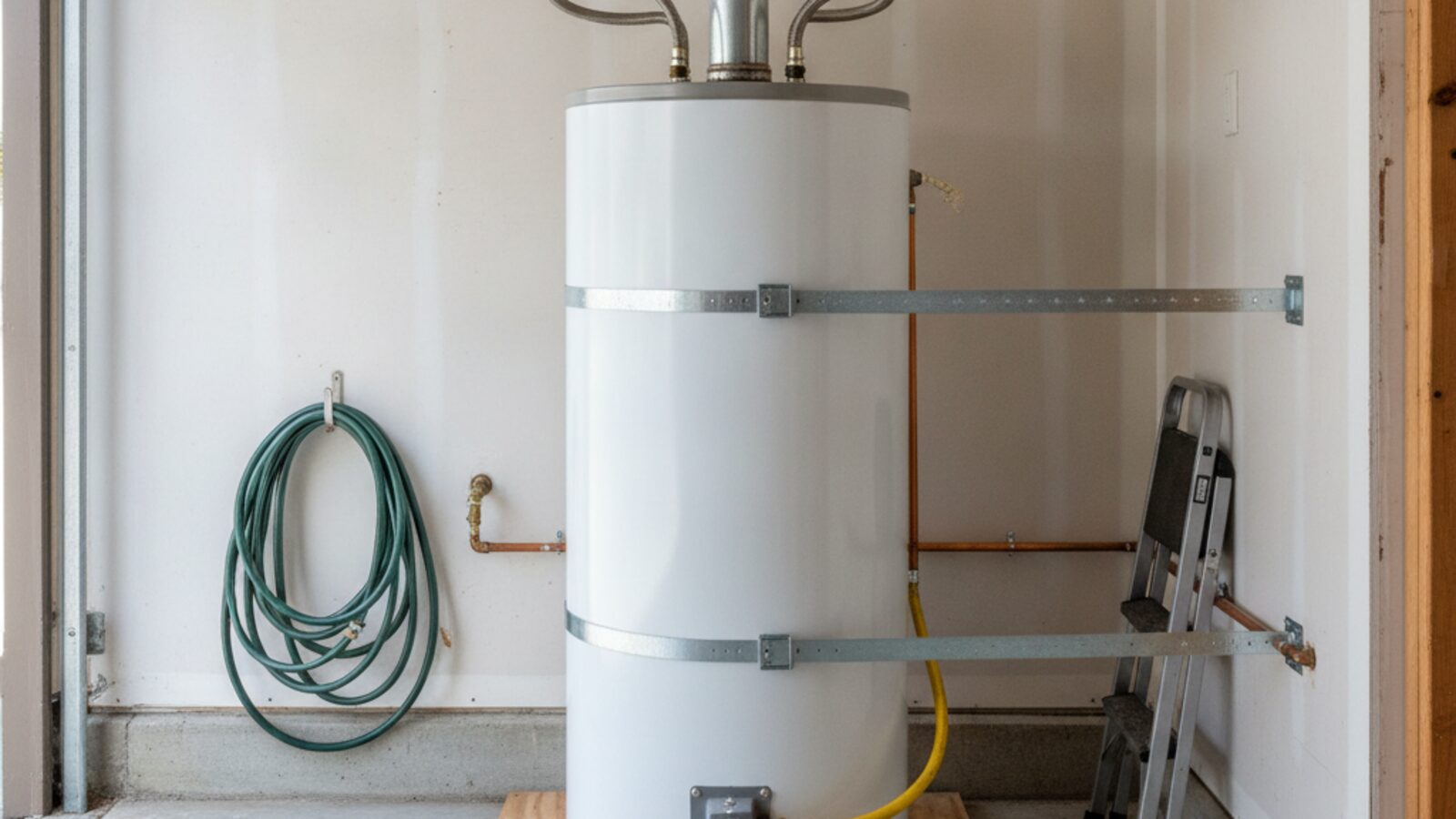
- Seismic strapping. The handout calls for two straps, within the upper and lower thirds of the heater, and notes that "plumbing tape is not permitted as strapping material." Our earthquake strapping guide covers the detail. - A relief valve drain line run to the outside of the building, not less than 3/4 inch. - Venting, gas shut-off and combustion air that meet the current code. - A raised platform for gas heaters in a garage, unless the unit is listed as flammable vapor ignition resistant.
These items are part of the real price of a replacement. They are also why a quote that looks far cheaper than the others usually leaves something out.
What to Tell Us When You Call
You will get a quicker, more accurate answer if you can tell us a few things before we arrive:
- Gas or electric, and roughly how old the heater is (or a photo of the label)
- What it is doing: no hot water, not enough, odd noises, rusty water, or water on the floor
- Whether the floor or pan under the heater is wet, and where the water seems to come from
- Whether it has ever been flushed or had the anode rod replaced
If water is coming out of the tank itself, shut off the cold water valve above the heater and turn the gas control to off or switch off the breaker, and then call.
Getting a Straight Answer in Hollister
DAE Plumbing, Inc. is a family-owned, licensed and insured plumbing contractor (CA Lic. #1047507) with more than 20 years of experience, based on El Toro Drive in Hollister. We test the parts before we recommend anything, fix only what needs fixing, and give you honest advice on whether to repair or replace. When replacement is the right call, our water heater replacement service covers sizing, the permit, the code items and hauling the old unit away. For a heater that only needs a part, our plumbing repairs team handles it. Estimates are free.