Why This Matters for Hollister Homeowners
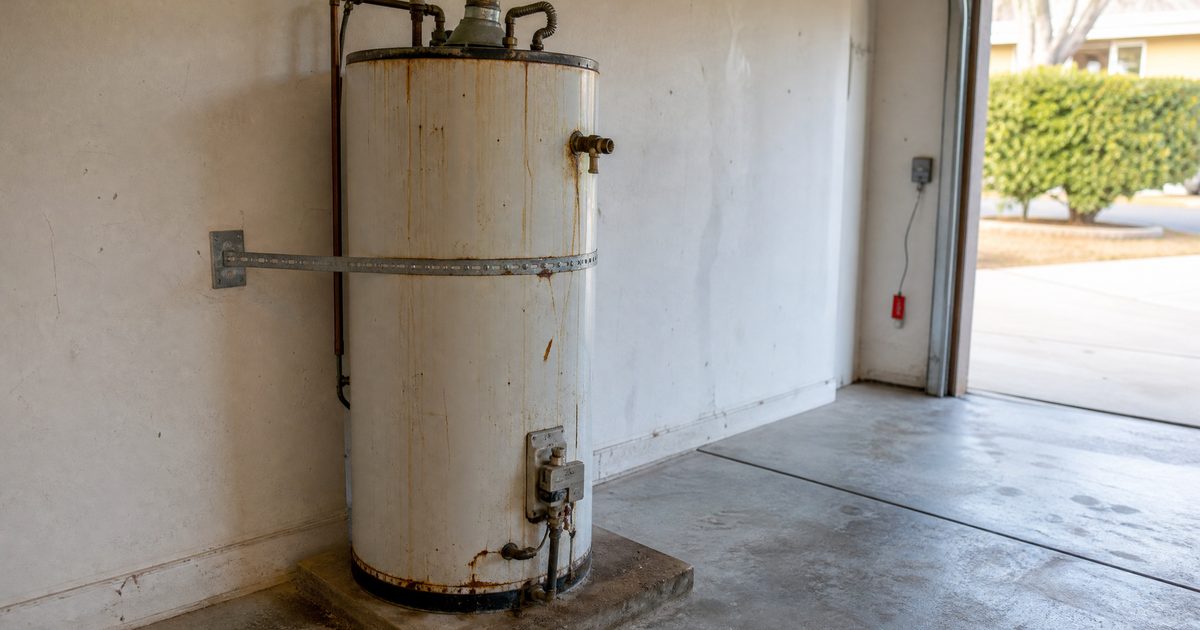
A water heater is the hardest-working appliance in your home, and it fails in one of two ways: gradually, with fading performance you can plan around, or suddenly, with 40 to 50 gallons of water on your garage or utility room floor. The difference between those two outcomes is whether you caught the warning signs. Hollister homes face a specific local challenge here. The water across the Hollister basin carries a heavy mineral load, and every gallon that passes through your tank leaves a little of that calcium and magnesium behind as sediment. That sediment blanket forces the burner to work harder, cooks the tank liner, and quietly shortens the unit's life. Knowing what a failing heater looks and sounds like lets you replace it on your schedule and your budget, not during an emergency on a holiday weekend.
Sign 1: Your Water Heater Is Past 10 Years Old
Age is the single most reliable predictor of failure. Find the manufacturer's label on the side of your tank and check the serial number or manufacture date. Most tank water heaters are designed for a 10 to 12 year service life under average conditions, and Hollister's hard water pushes real-world lifespans toward the short end of that range. Here is the practical math we walk customers through: a repair on a 12-year-old heater might cost a third of a replacement, but it buys you one or two more years at best on a tank that is already corroding from the inside. Every dollar spent repairing a unit past its design life is a dollar you will spend again soon. If your heater is under 8 years old and the problem is a component (a thermocouple, a heating element, a gas valve), repair usually makes sense. Past 10 years, put that money toward the new unit.
Sign 2: Rusty, Discolored, or Metallic-Tasting Hot Water
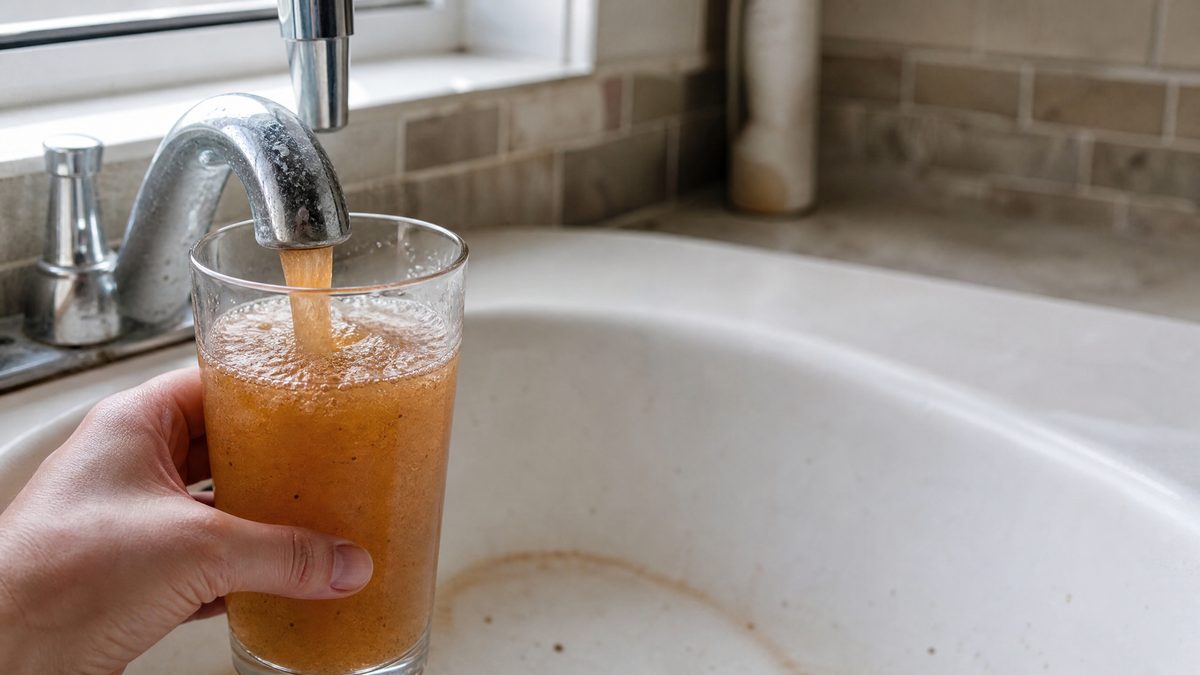
Run a hot tap into a white bucket or basin and look at the color. If the hot water comes out with a brown, yellow, or reddish tint, but the cold water runs clear, the corrosion is inside your water heater, not your supply lines. Every tank heater contains a sacrificial anode rod whose entire job is to corrode instead of the tank walls. When that rod is consumed and never replaced, the tank itself starts rusting from the inside out. By the time rust reaches your faucet, the tank walls are already compromised, and a leak is a matter of when, not if. A metallic taste or smell in hot water tells the same story. This is one of the clearest replace-versus-repair signals there is: you cannot un-rust a tank.
Sign 3: Rumbling, Popping, or Crackling Sounds
A healthy water heater is quiet. A rumbling or popping heater is telling you there is a thick layer of hardened sediment on the bottom of the tank. The noise is water trapped beneath the sediment layer flash-boiling as the burner fires: tiny steam explosions rattling the mineral crust. In Hollister and across San Benito County, this happens years earlier than in soft-water regions. Sediment does three expensive things at once: it insulates the water from the burner so the unit burns more gas for the same hot water, it overheats the tank bottom and fatigues the steel, and it can break loose and clog the drain valve and your hot water lines. Annual flushing slows this down significantly, and it is a maintenance step most homeowners skip. If your tank has been rumbling for a while and has never been flushed, the damage is likely done.
Sign 4: Moisture, Drips, or Corrosion Around the Unit
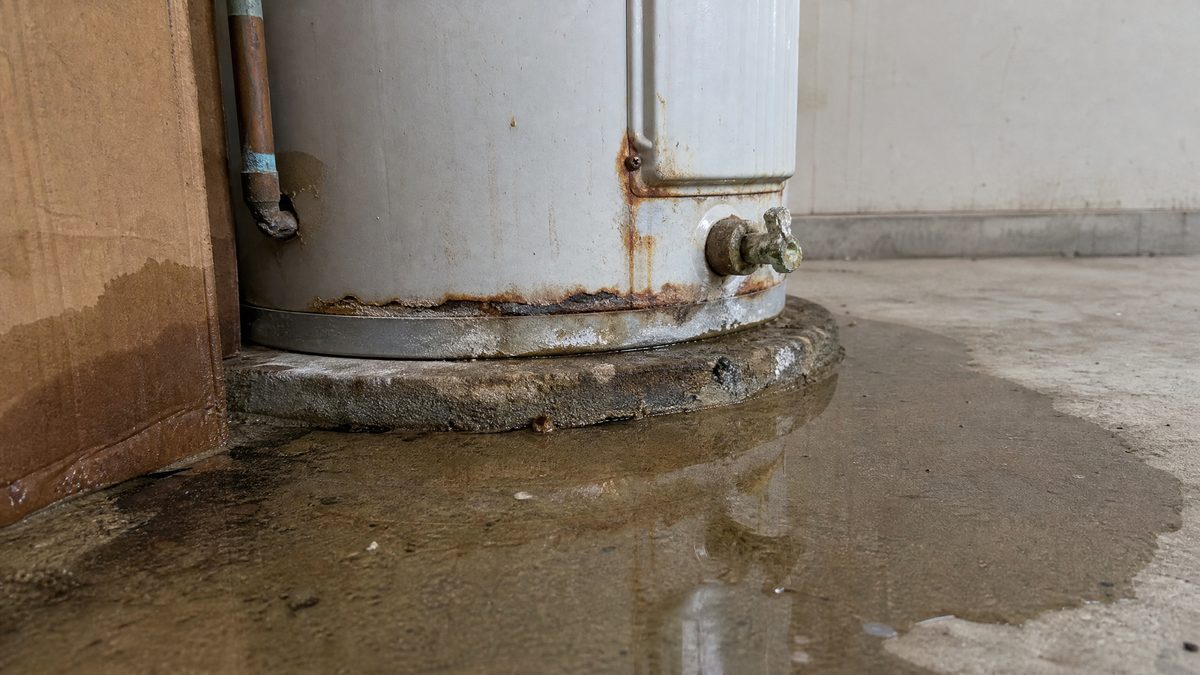
Walk out and look at your water heater today: the base, the fittings on top, the temperature and pressure relief valve on the side, and the floor around it. Moisture around the base of the tank usually means a slow internal leak seeping through a corroded seam. Corrosion or mineral crust at the inlet and outlet fittings means connections are seeping. A relief valve that drips constantly can indicate excessive pressure or a failing valve; both need professional attention. A small puddle is never "just condensation" on a gas heater in a California summer. Tank leaks do not heal, and they do not stay small. If you see standing water, shut off the cold water supply valve above the heater, turn the gas control to off (or flip the breaker for electric units), and call a licensed plumber the same day.
Sign 5: Hot Water Runs Out Faster Than It Used To
If your household hasn't grown but your showers are getting shorter, the culprit is almost always that same sediment layer. As minerals accumulate, they physically displace hot water capacity (a 50-gallon tank with years of Hollister sediment in it might hold 40 gallons of actual water), and they insulate the water from the burner, slowing recovery between uses. On electric units, scale builds directly on the heating elements, crippling their output. Falling capacity plus rising gas or electric bills is the signature of a heater working harder to deliver less, and it is the point where replacement starts paying for itself in operating costs. This is also the moment many of our customers choose to upgrade to a tankless unit for endless hot water, a roughly twenty-year lifespan, and freed-up floor space, though hard water makes pairing a tankless with a water softener strongly advisable in our area, and several manufacturers require treated water to honor their warranty.
Signs 6 and 7: Rising Energy Bills and Visible Corrosion at the Fittings
The last two signs are the quiet ones. A water heater losing efficiency rarely announces itself; it just burns more gas or draws more electricity every month to deliver the same showers. If your utility bill has crept upward without a rate change or a lifestyle change, and your heater is past its mid-life, the sediment layer inside is very likely the reason: the burner fires longer against an insulating blanket of minerals, and you pay for every extra minute. Compare a few months of bills year over year; a steady climb in the gas line item with stable usage is your tank talking. The seventh sign is visible corrosion at the connections: the inlet and outlet fittings on top of the unit, the relief valve threads, and the gas control area. Green or white crusty deposits mean fittings are seeping and reacting with the minerals in our water; rust streaks running down the tank jacket mean moisture has been escaping for a while. Corroded connections can sometimes be repaired in a younger unit, but on a tank past eight years they are usually the visible edge of corrosion happening everywhere else, and they belong in the replacement conversation.
What a Water Heater Replacement Costs in Hollister
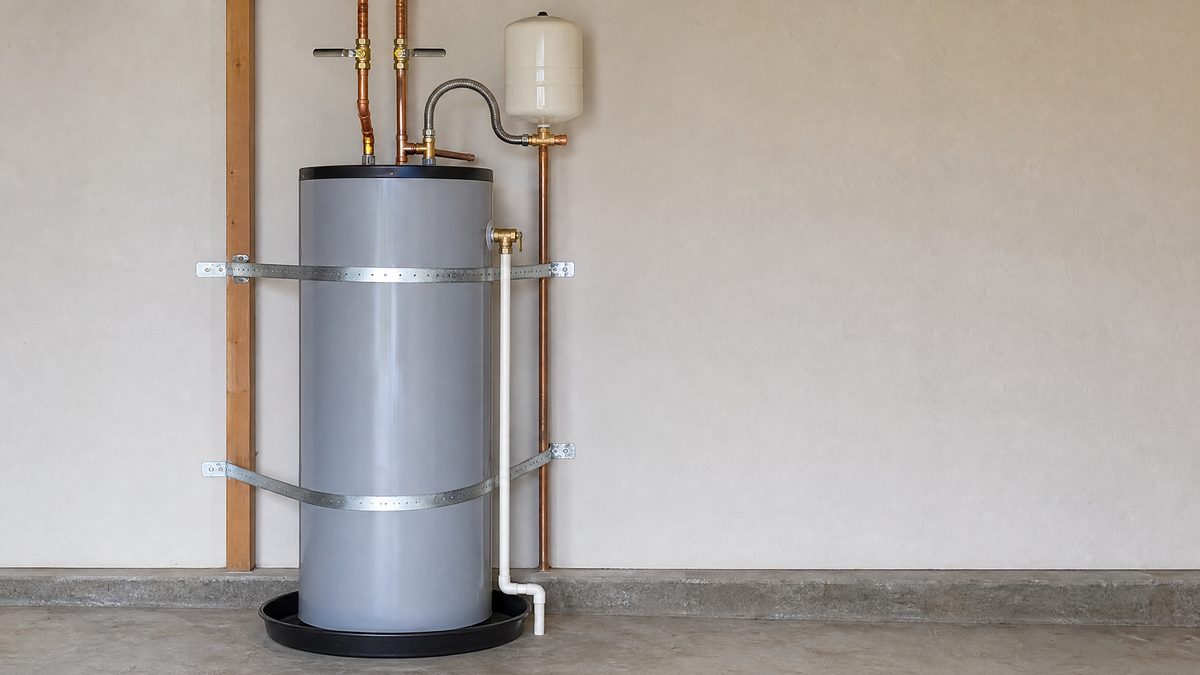
Cost depends on four factors: the unit type and capacity, the fuel source, the code upgrades your current installation is missing, and access. A like-for-like tank swap sits at the low end of the range. Costs climb when the new installation needs items that older installs commonly lack: seismic strapping (required in California), a thermal expansion tank, an updated relief valve and discharge line, or venting corrections. A tank-to-tankless conversion is the largest jump because it typically involves upsizing the gas line and installing new venting. Be careful with quotes that look dramatically cheaper than the rest: they usually exclude the code-required items, which show up later as change orders, or they skip the permit entirely. Water heater replacements require a permit in Hollister and throughout California; it exists to verify the strapping, venting, and relief valve that keep the unit safe. At DAE Plumbing, estimates are free and cover the complete installed price: unit, labor, code items, haul-away, and permit coordination.
When to Call a Professional
There is real DIY territory with water heaters: you can check the age on the label, listen for rumbling, inspect visually for moisture, and even flush the tank yourself if the drain valve cooperates. Where DIY ends is anything involving gas, venting, electrical connections, or the relief valve. A mis-piped relief valve or a botched gas connection is not a savings; it is a hazard to your household. California requires this work to be permitted and performed to code for good reason. Call a licensed plumber when you see rust in hot water, any moisture around the tank, a relief valve that drips, or when your unit is simply past ten years old and you want a professional assessment of whether it has another winter in it. An honest plumber will tell you when a repair still makes sense, and at DAE Plumbing, our customers' reviews say exactly that: we fix only what needs fixing.
Need a Plumber in Hollister? DAE Plumbing Is Ready to Help
Whether your water heater is showing early warning signs or has already quit, DAE Plumbing replaces tank and tankless units across Hollister, San Benito County, and the surrounding Central Coast. We are licensed (CA #1047507), bonded, insured, and family-owned, with free estimates on every replacement. Call us at (831) 801-1079 or contact us today to schedule service in Hollister and surrounding areas.