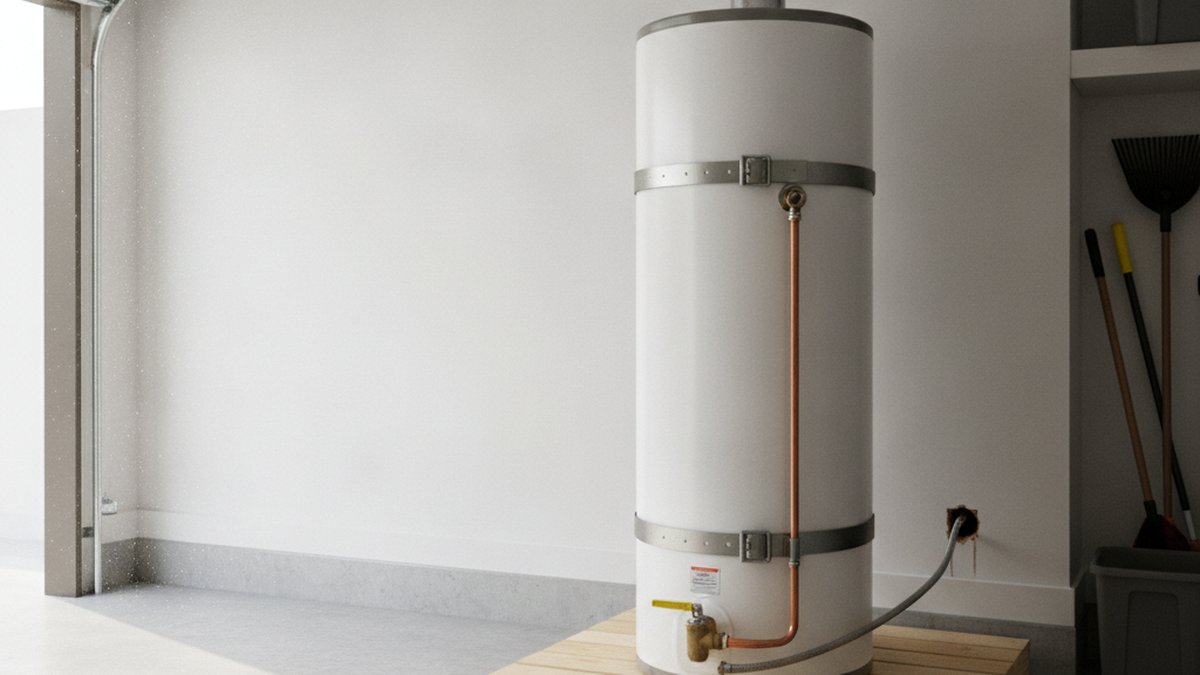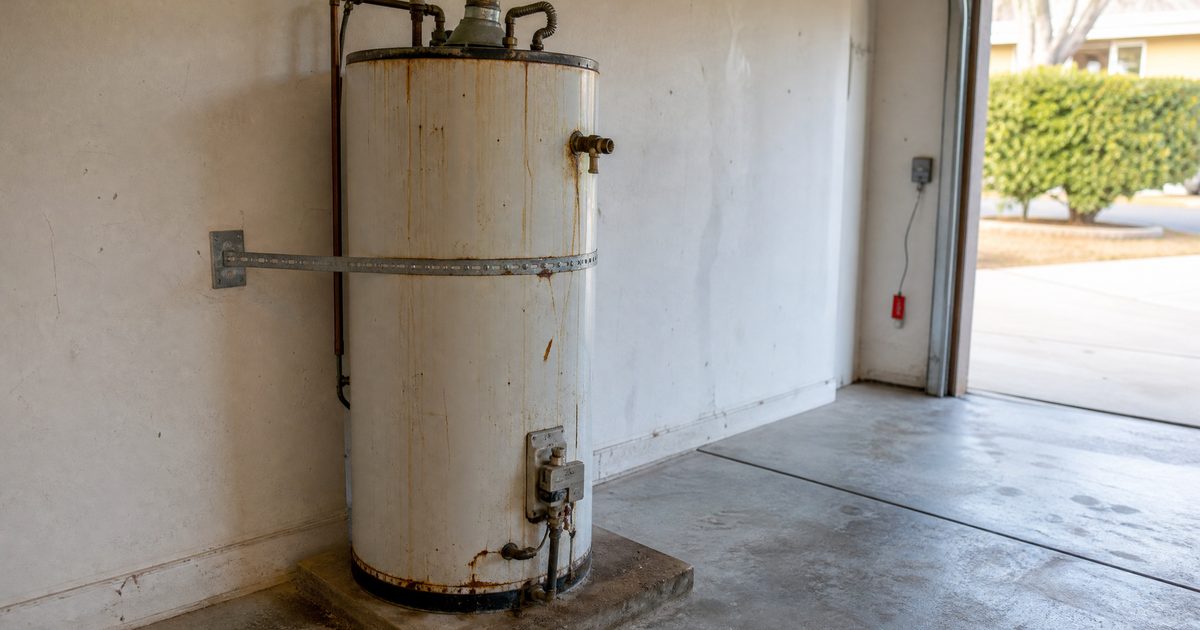
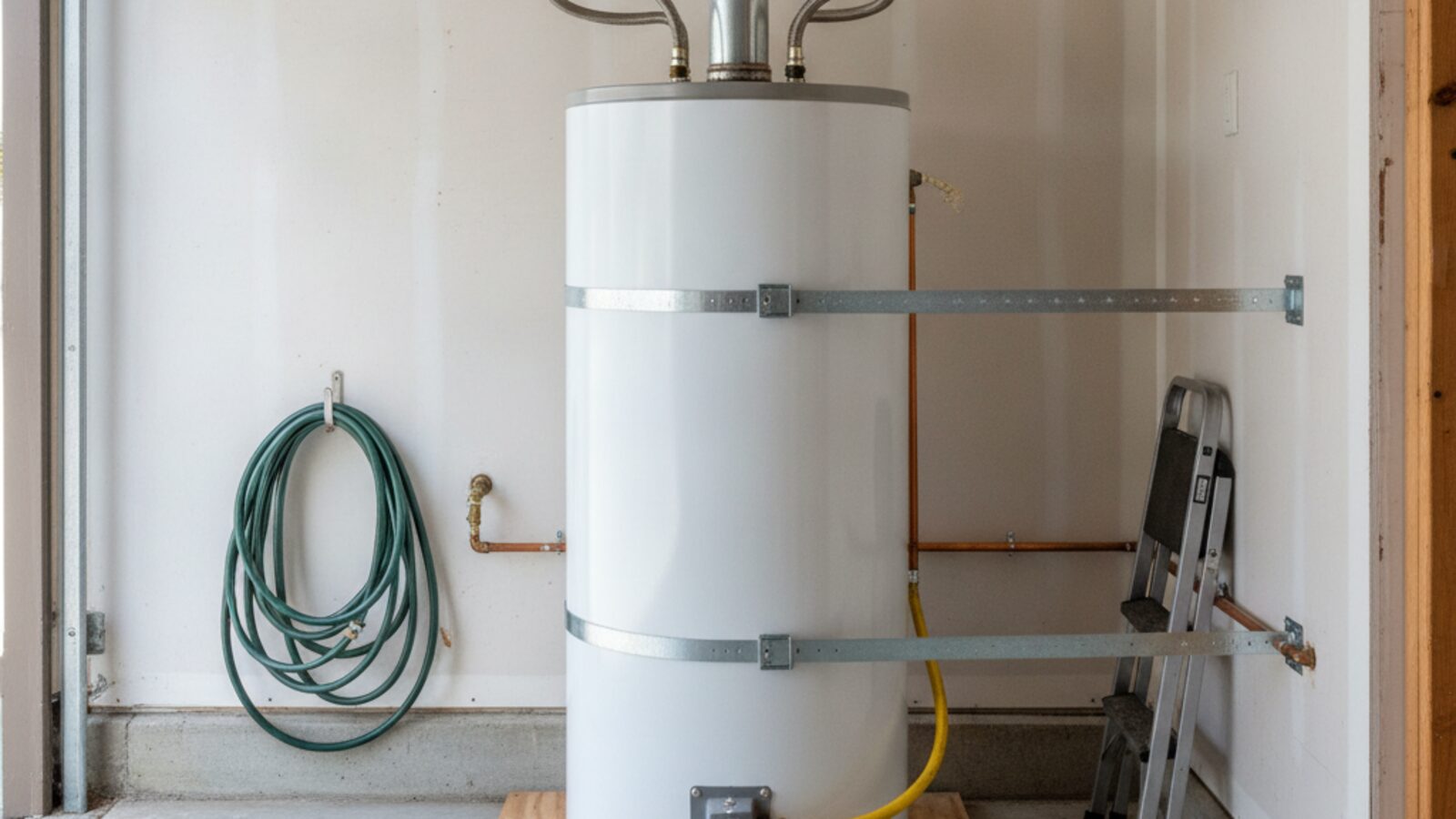
Most homeowners find this out at the worst possible moment — a home inspection three days before closing, or an escrow package asking the seller to certify something nobody has looked at in fifteen years. It is a small job. It is only expensive when it is discovered late, or when it is discovered by an earthquake.
What the Law Actually Says
The requirement is not a local preference or an installer's habit. As the City of Berkeley's building department guideline sets it out, California law under Health & Safety Code sections 19210–19217 requires:
> "Any new or replacement water heater sold in California on or after July 1, 1991 be braced, anchored or strapped when installed to resist falling or horizontal displacement due to earthquake forces."
And it carries a second obligation that catches people out at sale:
> "The seller of any real property containing a water heater to certify in writing to the purchaser that water heater bracing requirements have been met."
So there are two separate moments this comes due: when a heater is installed, and when the house changes hands. A tank installed before mid-1991 and never touched since is exactly the situation that produces a scramble during escrow.
Two Sets of Straps, Not One
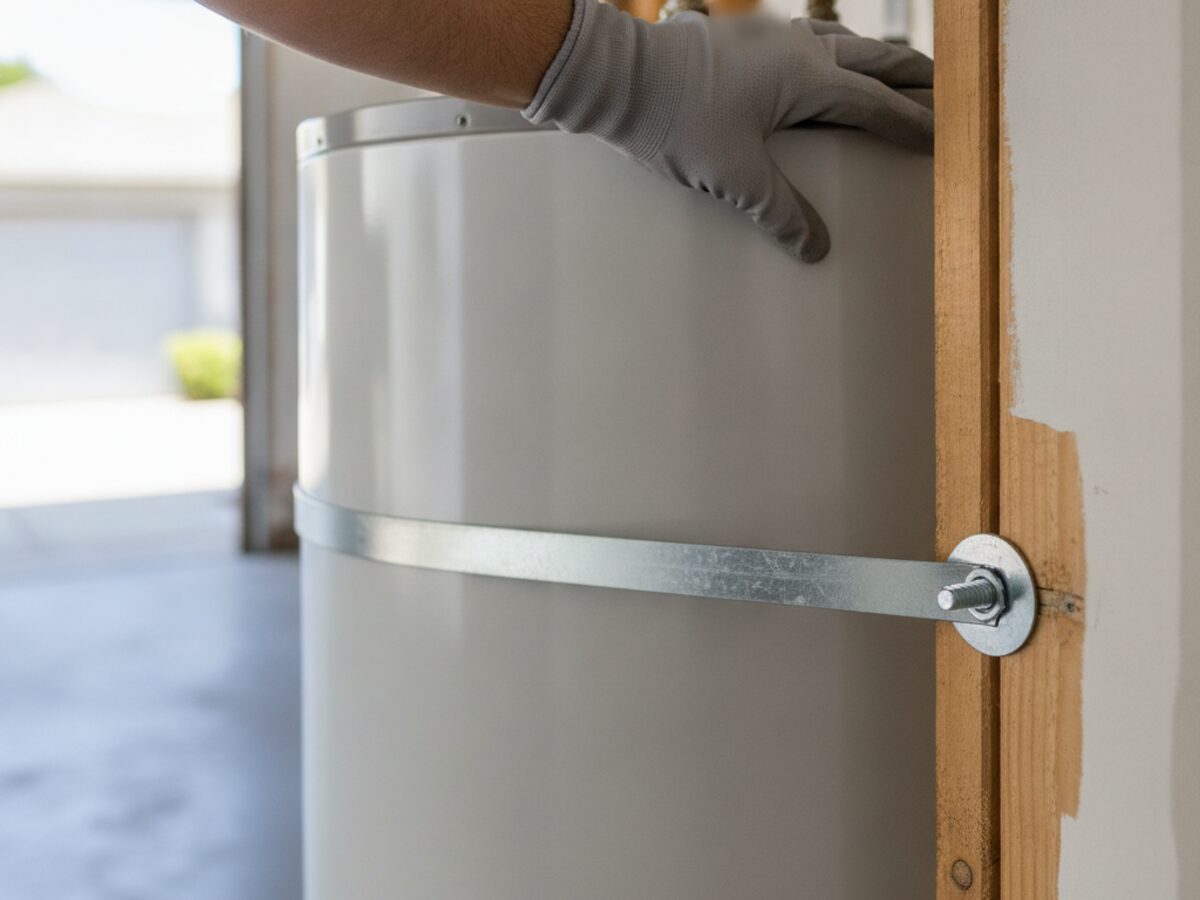
The single most common defect we find is a tank with one strap around the middle. That is not a compliant installation. The state's building and plumbing codes, in the words of the same guideline, "require that a minimum of two sets of bracing straps be provided to secure the water heater against movement." Tanks between 52 and 75 gallons need a third set at mid-height.
Placement is specified, too. The guideline instructs installers to "mark the water heater approximately 9 inches below the top for the upper strap location, and 4 inches above the top of the controls for the lower strap."
There is a reason for those two positions. A tank restrained only at its middle can still rock — the top pivots one way, the base kicks out the other, and the rigid connections at the top of the tank are what tear. Restraining the top and the bottom stops the rocking rather than merely resisting it.
A few other things separate a compliant install from a technically-strapped one:
- Straps must be taut and anchored into studs, not into drywall, with lag screws in pre-drilled pilot holes.
- Flexible connectors matter. The guideline is explicit: "it is strongly recommended that code-compliant flexible connectors be provided between the water heater and any water, gas, and electrical lines." Rigid pipe transmits movement straight into a joint.
- Platforms need securing. Gas water heaters in garages sit on a raised platform to keep ignition sources 18 inches above the floor. That platform should be secured to the floor or wall, or the tank and platform simply travel together.
What Actually Goes Wrong
The reason for the rule is unglamorous and specific. Again from the guideline: "During past earthquakes, water heaters have moved or tipped over if they were not securely anchored to adjacent walls or floors. This movement has resulted in gas line or water line leaks, and electrical wiring damage."
Read that order of consequences carefully. The tank is rarely the expensive part. A gas line pulled loose in a closed garage is a fire and asphyxiation risk. A supply line torn open puts 40 to 75 gallons on the floor and then keeps feeding it from the main until someone finds the shutoff. And this tends to happen at exactly the moment when emergency plumbing help is hardest to reach and the household is least composed.
Why This Is Not an Abstract Risk in Hollister
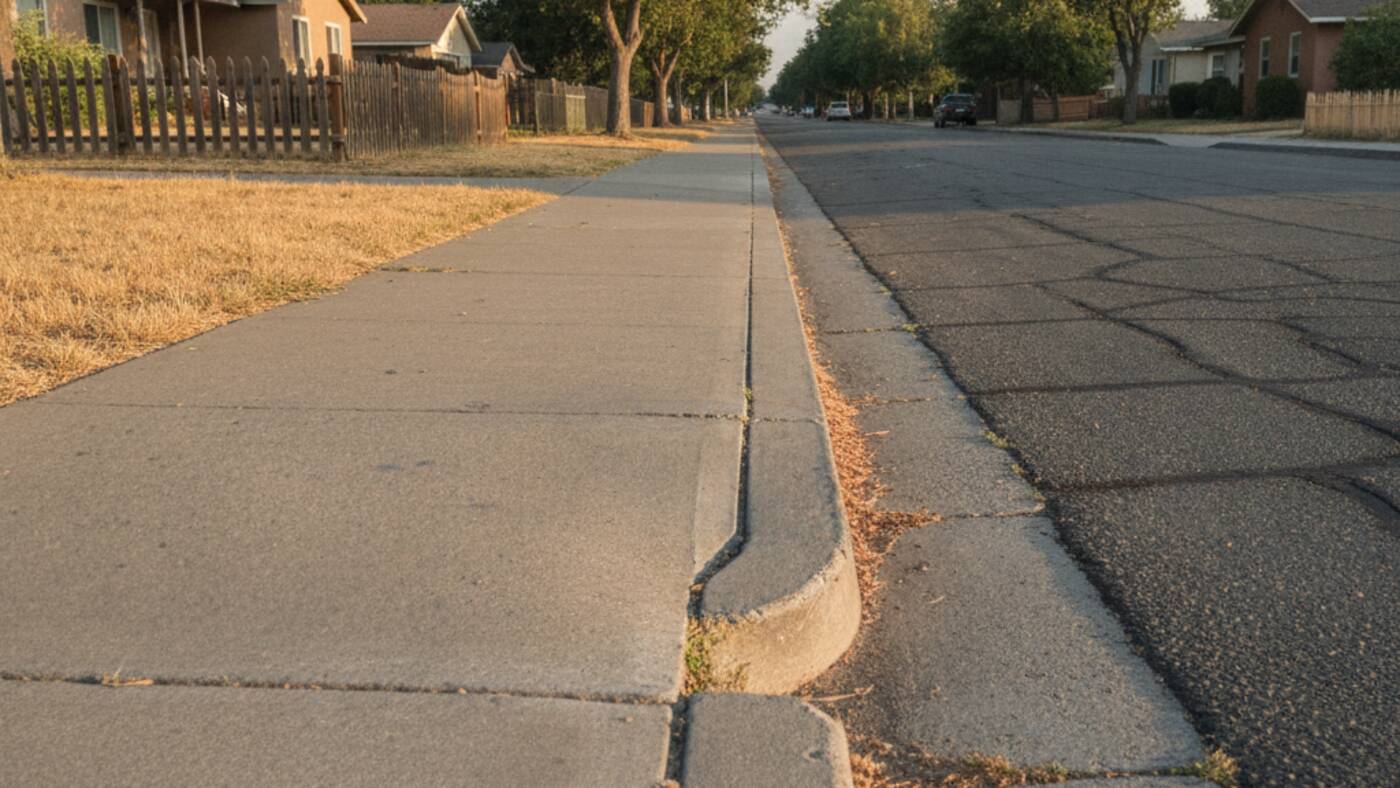
Hollister has an unusual relationship with its fault. According to the U.S. Geological Survey, "the Calaveras Fault runs through the urban heart of Hollister. Dozens of residential homes are built on, or immediately adjacent to, the active creeping trace of the fault," and "cracks and offset sidewalks, curbs, walls, and buildings can be seen along every street and alley." The USGS puts the creep in the range of 11 to 19 millimeters per year.
It is worth being precise about what that does and does not mean, because the two get conflated. Creep is not shaking. A fault creeping a centimeter or so a year bends curbs and cracks foundations slowly, over decades; it will not knock a water heater over on a Tuesday afternoon. What the creep tells you is something else: the fault beneath the town is active and loaded, and the same USGS report notes the Hollister region took damage from both the 1906 and 1989 earthquakes.
So the strapping argument here does not rest on creep. It rests on the fact that this is a town with a live fault under its streets and a documented history of shaking, where the cost of compliance is a couple of hundred dollars and the cost of non-compliance is measured in a flooded garage or worse.
The Cheapest Time to Fix It Is at Replacement
If your tank is near the end of its life anyway, this stops being a separate job. A code-compliant water heater replacement includes the seismic bracing, the flexible connectors, the expansion tank, the relief valve discharge line and the drip pan as part of the installation — not as line items you approve one at a time.
If the tank is sound and only the bracing is wrong, that is a short visit on its own, and it is the kind of thing worth handling before it appears on an inspection report. Either way, two things are worth checking yourself this week: whether there are two straps or one, and whether you can put a hand behind them and find them tight.
One caveat worth stating plainly. Bracing is enforced by the building department with jurisdiction over your address — for most readers here, the City of Hollister or San Benito County — and local requirements can be stricter than the state minimum. If you are certifying compliance for a sale, confirm the detail with your jurisdiction rather than relying on any article, this one included.
If You Are Not Sure What You Have
Most people have never looked closely at the strapping on their own tank, and a surprising number of installations we inspect were done by a previous owner with hardware from a big-box kit and good intentions.
DAE Plumbing has served Hollister, Gilroy, Morgan Hill and San Benito County since 2018. If you want the installation checked, corrected, or replaced properly, call (831) 801-1079 or get in touch and we will tell you exactly what your tank is missing before anyone quotes you anything.
---
Sources, verified September 10, 2026: City of Berkeley Building & Safety, Guidelines for Residential Water Heater Earthquake Bracing, which reproduces the requirements of California Health & Safety Code sections 19210–19217; and U.S. Geological Survey, Open-File Report 2005-1127, Field Trip to the Calaveras and San Andreas Faults.