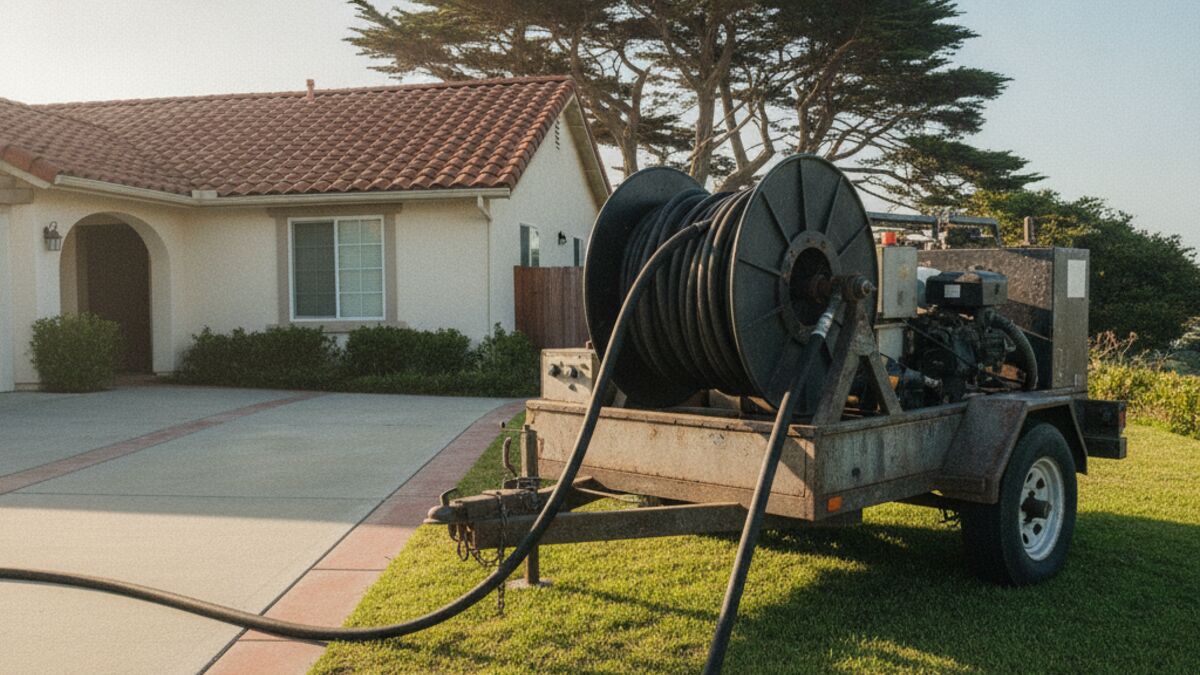
Jetting usually costs more than running a cable through the same line, because the equipment and the time on site are greater. What you are paying for is different too: a cable opens a hole through a blockage, while jetting cleans the pipe wall back to its full diameter. Our hydro jetting vs. snaking guide explains that difference in detail.
Line Length and Access
The single biggest factor is how much pipe has to be cleaned and where the hose can go in. A lateral with an accessible cleanout near the house is quick to set up. A line with no cleanout, or one that is buried under a deck or concrete, may need access created first, and that adds time before jetting starts.
Long runs to the street, lines that serve several buildings on one lot, and multi-unit properties all add hose length and time.
What Is Inside the Pipe
Soft blockages clear quickly. Heavy buildup takes longer and may need more than one pass with different nozzles:
- Grease coats the pipe wall and keeps catching debris. It is the main load in restaurant and commercial kitchen lines. - Roots grow in through the joints of older clay laterals. A rotating root-cutting nozzle strips them back, and the line is flushed clean. - Mineral scale builds up over years in hard water areas like ours and narrows the pipe from the inside.
The more of it there is, the more time the job takes. Locally, the pattern is predictable: older clay laterals in Hollister, San Juan Bautista and Watsonville tend to carry roots at the joints, hard water adds scale across the region, and busy restaurant lines in Salinas, Monterey and Santa Cruz carry the heaviest grease loads.
Why a Camera Look Comes First
We put a camera down the line before quoting jetting. It shows the pipe material, the diameter, what the buildup is and where it sits, and whether the pipe is sound enough to jet at all. Older clay or cast iron in poor condition may not tolerate high pressure, and jetting a pipe that is already broken does not fix it.
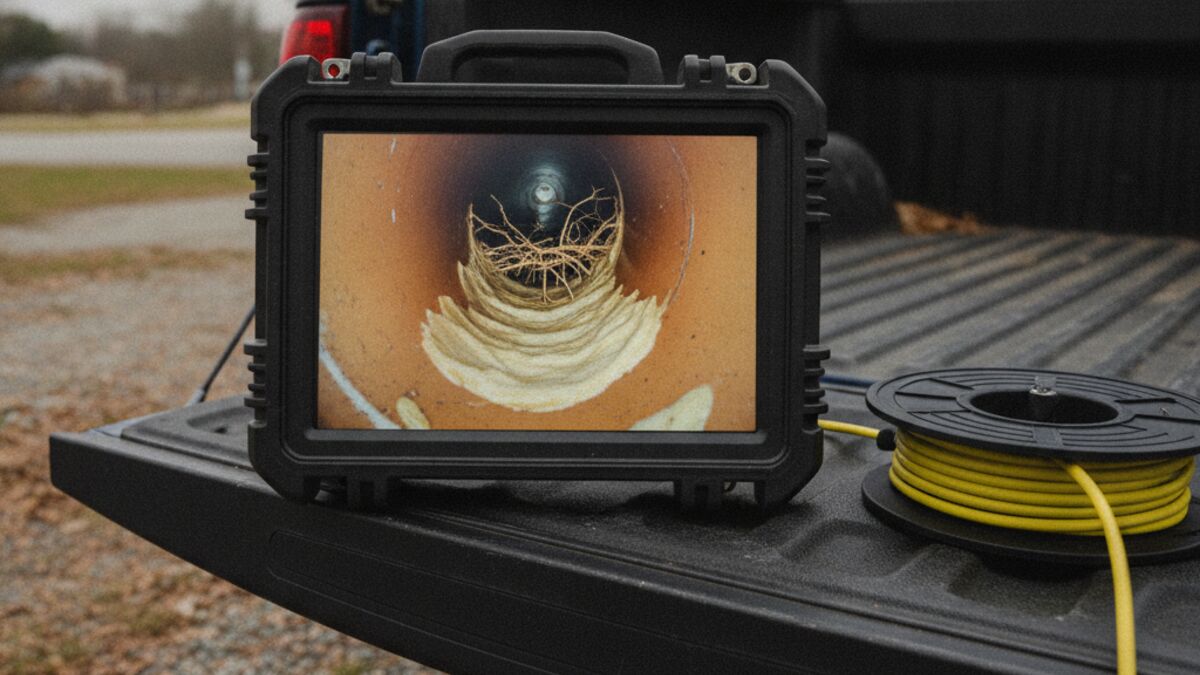
The camera can change the price in either direction. Sometimes it shows the line only needs a standard drain cleaning. Sometimes it shows a collapsed section that no cleaning will solve, and the conversation moves to underground plumbing repair instead. Either way, you find out before paying for the wrong job.
Residential Versus Commercial Lines
Commercial lines usually cost more to jet. They are often longer and larger, carry more grease, and may need cleaning on a schedule rather than once. Restaurants with a grease interceptor also have city requirements to meet; our guide to grease interceptors for Hollister restaurants covers that side.
When Jetting Saves Money
If a line is cabled every few months and keeps backing up, the repeat visits add up. Jetting removes the buildup the cable leaves behind, so the line usually stays clear for much longer. The U.S. Environmental Protection Agency describes jetting as "the most common hydraulic cleaning technique due to its comparatively low cost and effective cleaning results" in its technology descriptions for sewer operation and maintenance.
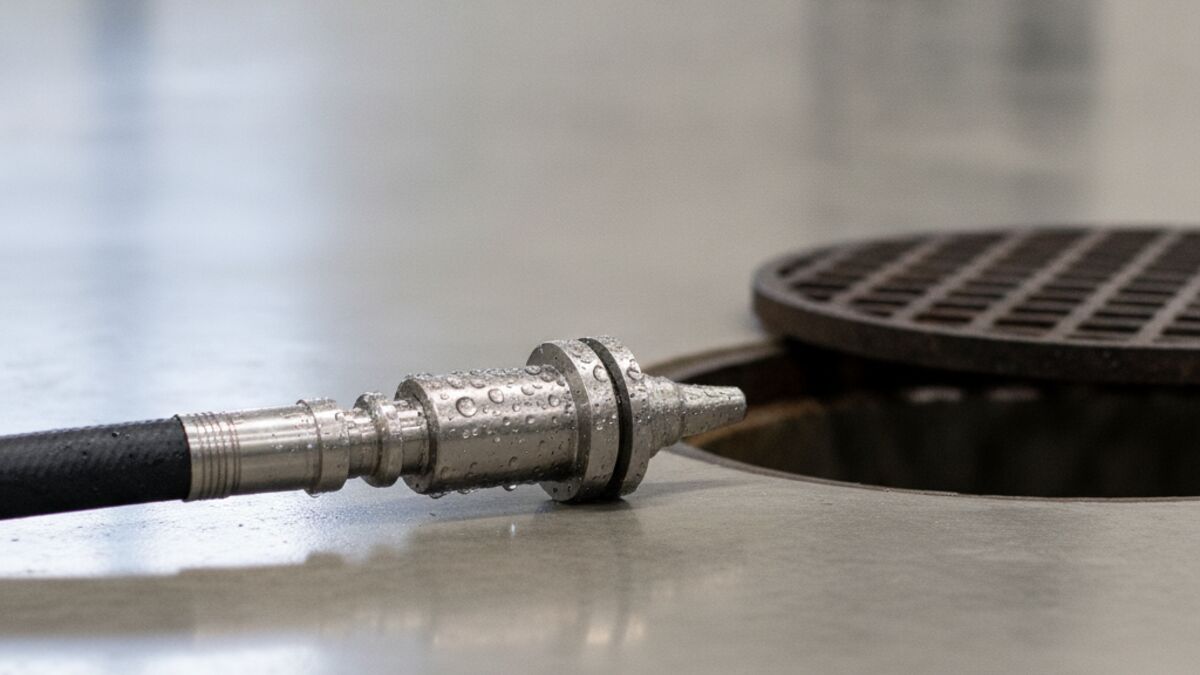
Jetting is also the standard preparation before a pipe is lined, because a liner needs a clean, scoured surface to bond to.
Getting an Accurate Price
When you call, it helps to know roughly how old the house is, whether there is a cleanout, how often the line backs up, and whether it has been camera-inspected before. That lets us tell you on the phone what the job is likely to involve.
DAE Plumbing provides hydro jetting for homes and businesses across Hollister, Santa Cruz, Watsonville and the Central Coast, including hydro jetting in Santa Cruz. We are licensed and insured, CA Lic. #1047507, and estimates are free.
Call (831) 801-1079, or (408) 728-2856 for Gilroy, Morgan Hill and San Jose.