
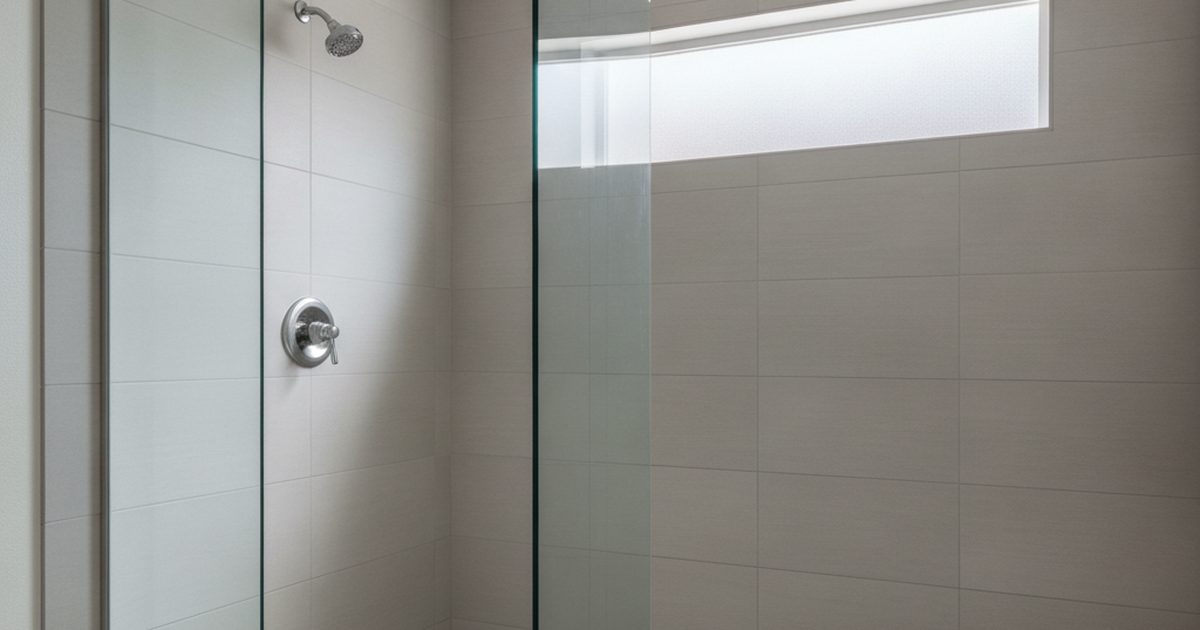
Knowing that list before demolition starts is what keeps the fixture budget honest and the rough-in inspection to a single visit.
The City's Plumbing Checklist for a Bathroom Remodel
The City of Hollister Building Division publishes a handout, Bathroom Remodel Requirements (No Structural Work), that sets out what its inspectors look for. The plumbing items are:
- Shower and tub valves: "Any new or replaced mixing valve in a shower or tub shall be a temperature/pressure balancing type and set at a maximum 120 degrees F."
- Flow rates: a maximum of 1.8 gpm for a showerhead and 1.2 gpm for lavatory sinks.
- Toilets: a maximum of 1.28 gallons per flush, with 30 inches of clear width and 24 inches of clear space in front.
- Shower size: a finished interior of at least 1,024 square inches, large enough to take a 30-inch circle.
- Shower doors: swinging out of the enclosure, with a clear opening of at least 22 inches.
- Showerhead position: on the sidewall, or arranged so it does not spray straight at the entrance.
- Sealing: where a toilet or other fixture meets the wall or floor, the joint is caulked watertight.
The same handout also covers safety glazing, GFCI receptacles, lighting and an exhaust fan ducted to the outside, so plumbing is only part of what gets checked.
The Shower Valve Is the Item Most Remodels Change
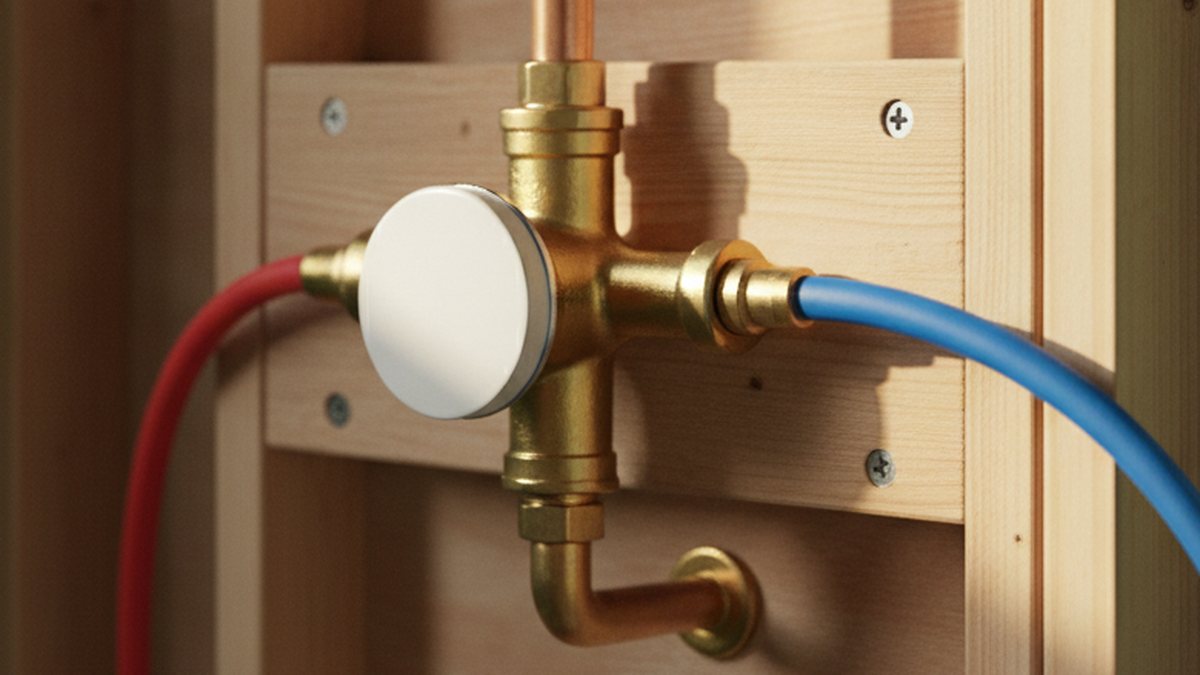
The valve body sits inside the wall behind the tile. Once a shower wall is opened for new tile, a replacement valve is usually part of the job, and the City's rule applies to any new or replaced mixing valve.
A pressure balancing valve holds the shower temperature steady when pressure changes elsewhere in the house, such as when someone flushes a toilet or the washing machine starts filling. The 120°F maximum is a limit set at the valve, separate from the temperature the water heater is set to.
Choose your shower trim before rough-in. Valve bodies and trim kits generally have to match, so picking a fixture after the valve is in the wall can mean opening the wall again.
Homes Built Before 1994: California's Fixture Law
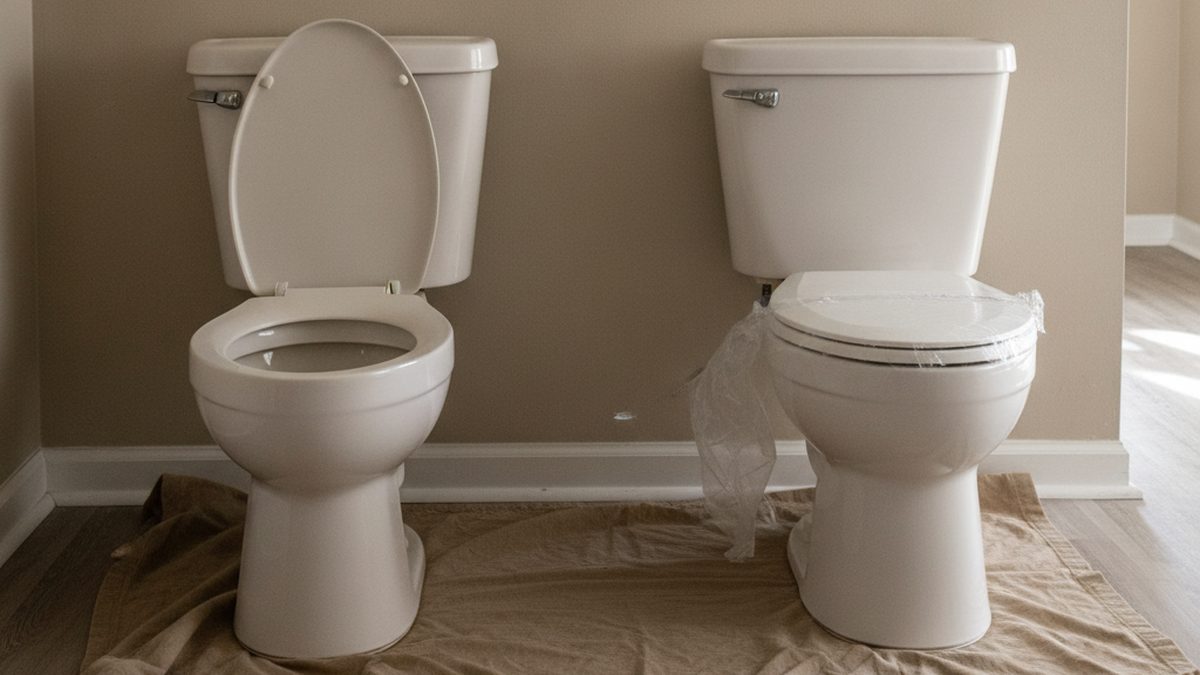
California Civil Code sections 1101.1 to 1101.8 add a requirement that has nothing to do with the new bathroom's design. Section 1101.2 applies it to residential and commercial property "built and available for use on or before January 1, 1994," with exceptions listed in section 1101.7.
For a single-family home, section 1101.4 is direct: "For all building alterations or improvements to single-family residential real property, as a condition for issuance of a certificate of final completion and occupancy or final permit approval by the local building department, the permit applicant shall replace all noncompliant plumbing fixtures with water-conserving plumbing fixtures."
Section 1101.3 defines a noncompliant fixture as a toilet made to use more than 1.6 gallons per flush, a urinal over one gallon per flush, a showerhead with a flow capacity over 2.5 gallons per minute, or an interior faucet that emits more than 2.2 gallons per minute.
Two details catch homeowners out:
- The statute says all noncompliant fixtures, not only the ones in the room being remodeled. An original toilet in the hall bathroom can count.
- The numbers that make an old fixture noncompliant are looser than the limits a new fixture has to meet under the City's handout. A replacement has to be bought to the newer figure.
Your building department has the final word on how the law applies to your permit, so raise it when you apply.
Moving a Fixture Changes the Scope
Keeping the toilet, vanity and shower where they already are is the least expensive way to remodel. Moving any of them means rerouting the drain, vent and supply lines. On a slab foundation that includes cutting and patching concrete; on a raised foundation it means work in the crawlspace.
Turning a tub into a walk-in shower is a common layout change. The drain usually moves, and the new shower still has to meet the 1,024-square-inch minimum and the 22-inch door opening.
Before the Walls Close
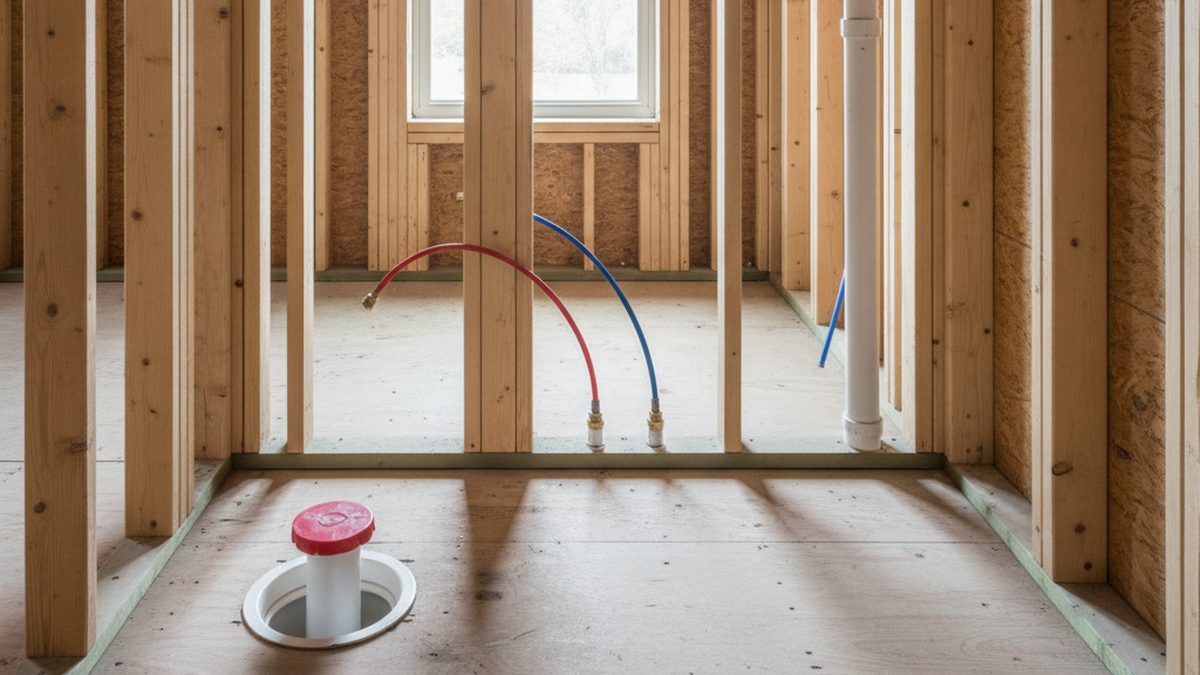
Rough-in is the stage where the new lines are run but the walls are still open. We pressure-test and check everything before the walls close, because anything found after tile goes up means cutting into a finished wall.
If the remodel includes a new water heater, treat it as its own item. The City's Water Heater Requirements handout says "A permit is required for all water heater installations, including replacement units," and the inspection includes seismic strapping, which we covered in our water heater strapping guide. Our water heater replacement page explains how we handle the swap.
Planning a Bathroom Remodel in Hollister
Confirm the permit for your exact scope with the City of Hollister Building Division on (831) 636-4355 before work starts. Then have the plumbing priced from your plan, including any older fixtures elsewhere in the house that the state law may require you to replace.
DAE Plumbing is a family-owned, licensed Hollister plumber serving San Benito County since 2018. We handle the rough-in, valve and fixture work for bathroom and kitchen remodel plumbing, and estimates are free. Call (831) 801-1079 or get in touch.
---
Sources, verified September 16, 2026: City of Hollister Building Division, Bathroom Remodel Requirements and Water Heater Requirements; California Civil Code sections 1101.2, 1101.3 and 1101.4.