That answer frustrates people who want a number. It is still the honest one, and it saves money in both directions: nobody pays to clean a healthy pipe on a calendar, and nobody waits for a second backup to learn that their line needs regular attention.
What Actually Clogs a Main Line
The main line, or lateral, carries every drain in the house out to the city sewer. It rarely blocks because of one bad flush. It blocks because something builds up over time.
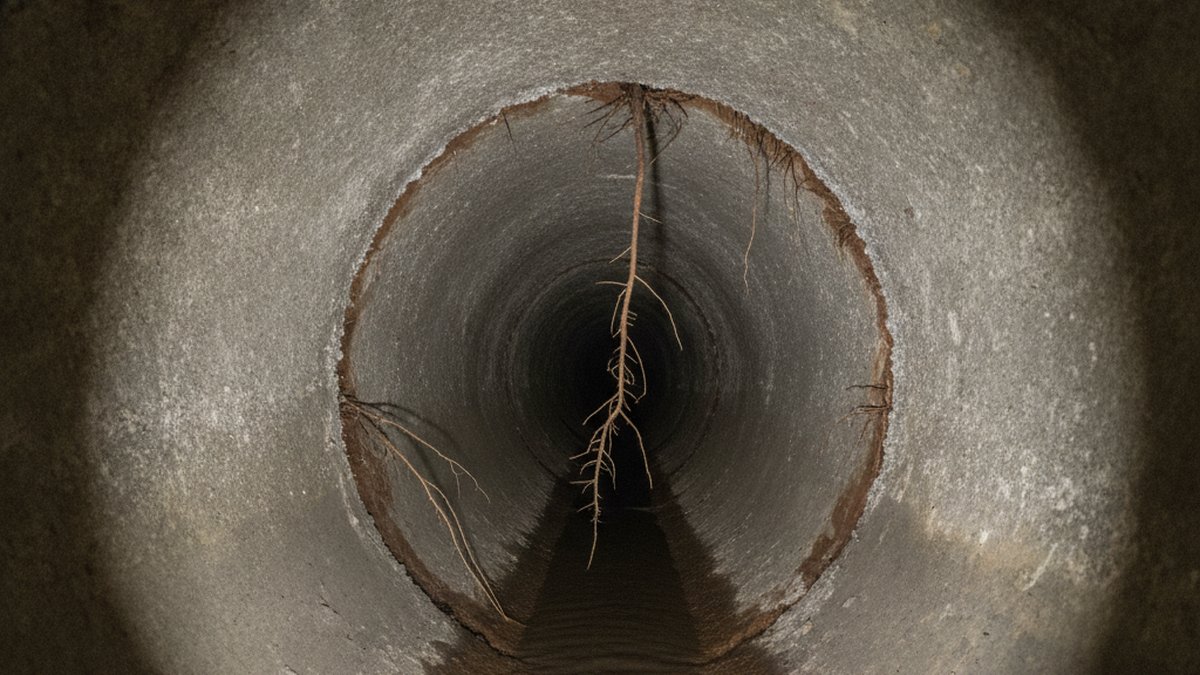
Tree roots are the big one. Researchers reviewing sewer systems reported that roots cause more than half of all sewer blockages (Randrup, McPherson and Costello, Journal of Infrastructure Systems, 2001). Roots find joints and hairline cracks, grow in toward the water, and form a mat that catches everything behind it. Cutting them out opens the line, but it does not stop them growing back.
Grease and soap coat the pipe wall a little at a time, narrowing the opening until paper and waste start to catch.
Scale builds up on older cast iron and galvanized pipe, especially in the harder water around the Central Coast.
Bellies, sections that have settled lower than the pipe on either side, hold water and solids instead of draining them.
Each of these comes back at its own pace, which is why a single schedule does not fit every house.
Setting the Right Interval
No history of problems, no large trees near the line. No routine cleaning is needed. Watch for the early signs below and leave it alone otherwise.
One backup, cause unknown. Clear it, then have the line scoped. The camera shows whether you had a one-off (something flushed that should not have been) or a condition that will return (roots, a belly, a failing joint).
Roots confirmed, pipe otherwise sound. This is where a maintenance interval makes sense. Most homeowners start by clearing the line before the point where it blocked last time, then adjust. If the line comes back clean, stretch the interval. If roots are already heavy again, shorten it.
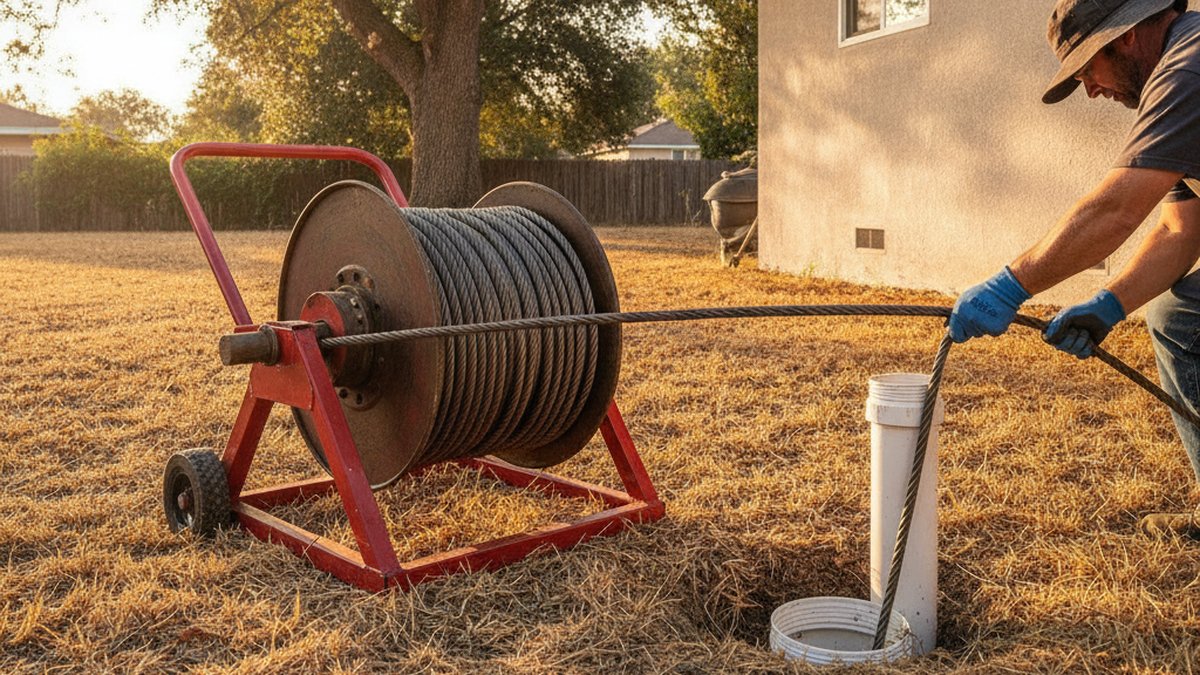
Grease, scale or a belly. Hydro jetting usually buys more time than a cable, because it cleans the pipe wall rather than punching a hole through the blockage. Our piece on hydro jetting versus snaking explains the difference.
Clearing more than once or twice a year. At that point the maintenance bill is telling you something. A spot repair or a liner may cost less over a few years than repeated clearing, and camera footage is what makes that comparison fair.
Early Signs the Line Is Due
You do not have to wait for sewage in a shower. The main line usually warns you first:
- Gurgling from a toilet or tub when another fixture drains
- Several drains slowing down at the same time, not just one
- Water rising in the shower when the toilet is flushed
- Sewage odour near the cleanout or in the yard
- A patch of lawn over the line that stays greener or wetter than the rest
One slow sink is a fixture problem. Several slow fixtures at once point to the main.
Why Hollister and Nearby Towns Are Prone to It
Many older neighbourhoods in Hollister, and around downtown Watsonville and Freedom, still have clay or cast iron laterals under mature trees. Clay joints are exactly where roots get in, and cast iron scales from the inside. Newer subdivisions with PVC laterals see far less of this, though a PVC line can still collect grease or settle.
If you do not know what your lateral is made of, that alone is a good reason for a camera inspection. It is also worth knowing where your cleanout is before you ever need it. If you are dealing with a backup right now, start with our step-by-step sewer backup guide.
If the blockage is in the city main rather than your lateral, the City of Hollister Utilities Division handles it (831-636-4377 during office hours).
Keep a Simple Record
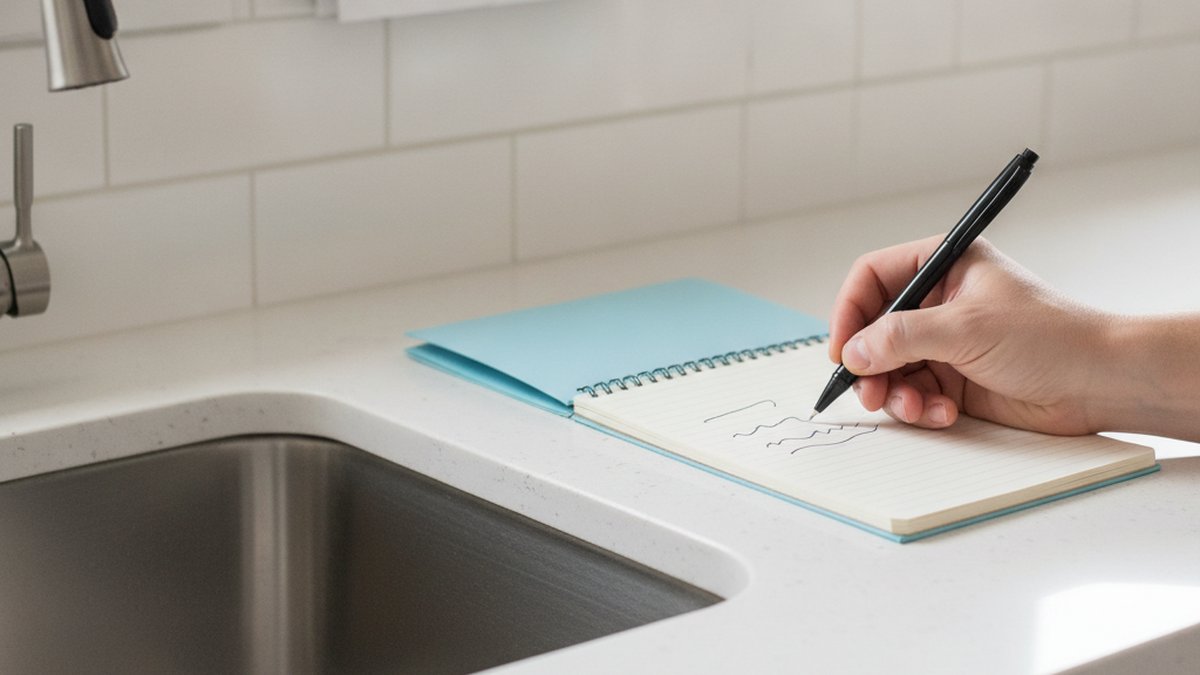
Write down the date of each clearing, what was found and what method was used. Two or three entries are usually enough to show a pattern, and they make any future quote easier to judge. Ask for the camera footage when a line is scoped and keep it with the record.
Getting It Scheduled
DAE Plumbing provides sewer cleaning across Hollister, Gilroy, Watsonville, Morgan Hill and the Central Coast, with camera inspection when a line keeps coming back. We are licensed and insured, CA Lic. #1047507, and estimates are free.
Call (831) 801-1079, or (408) 728-2856 for Gilroy, Morgan Hill and San Jose.