
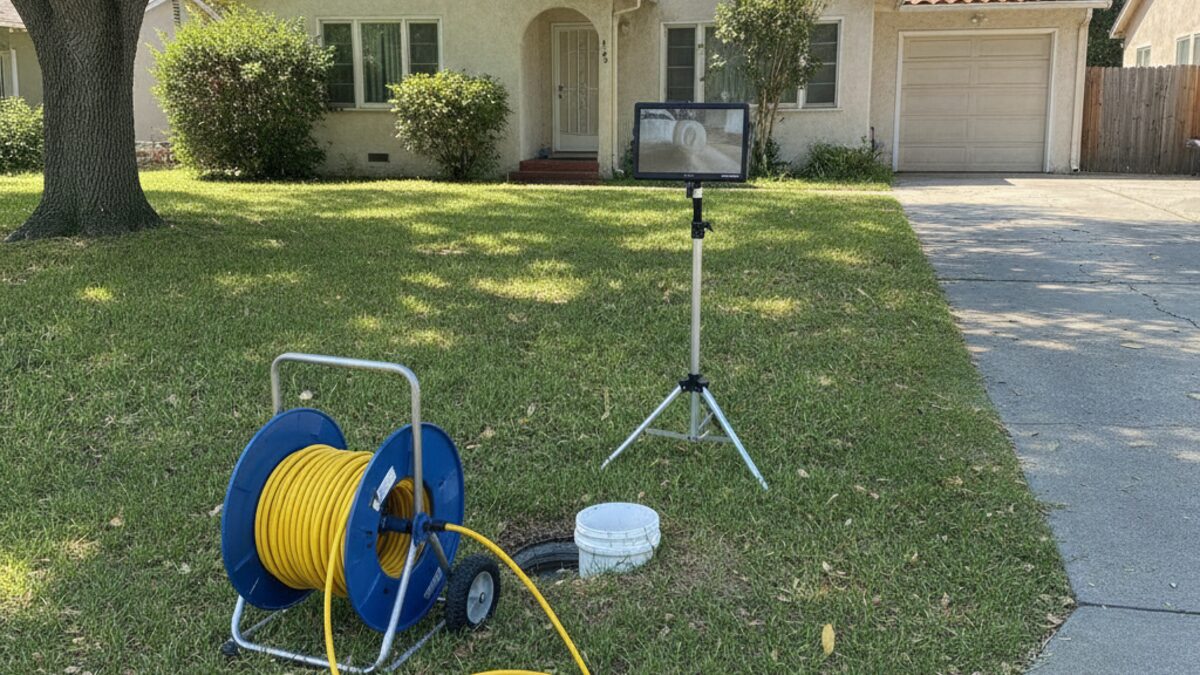
A camera is the only way to know, and the inspection takes under an hour.
A Home Inspection Does Not Cover It
This surprises people and is worth stating plainly: a general home inspection looks at plumbing that can be seen and operated. Fixtures, visible pipe, whether drains carry water away.
The lateral running from the house to the main is buried. Its condition cannot be judged from inside, and a line that drains acceptably on the day can still be in poor condition — a pipe can be badly deteriorated and still pass water until the day it does not.
If you are buying, ask whether a sewer scope is included. It usually is not, and it is booked separately.
What the Camera Actually Finds
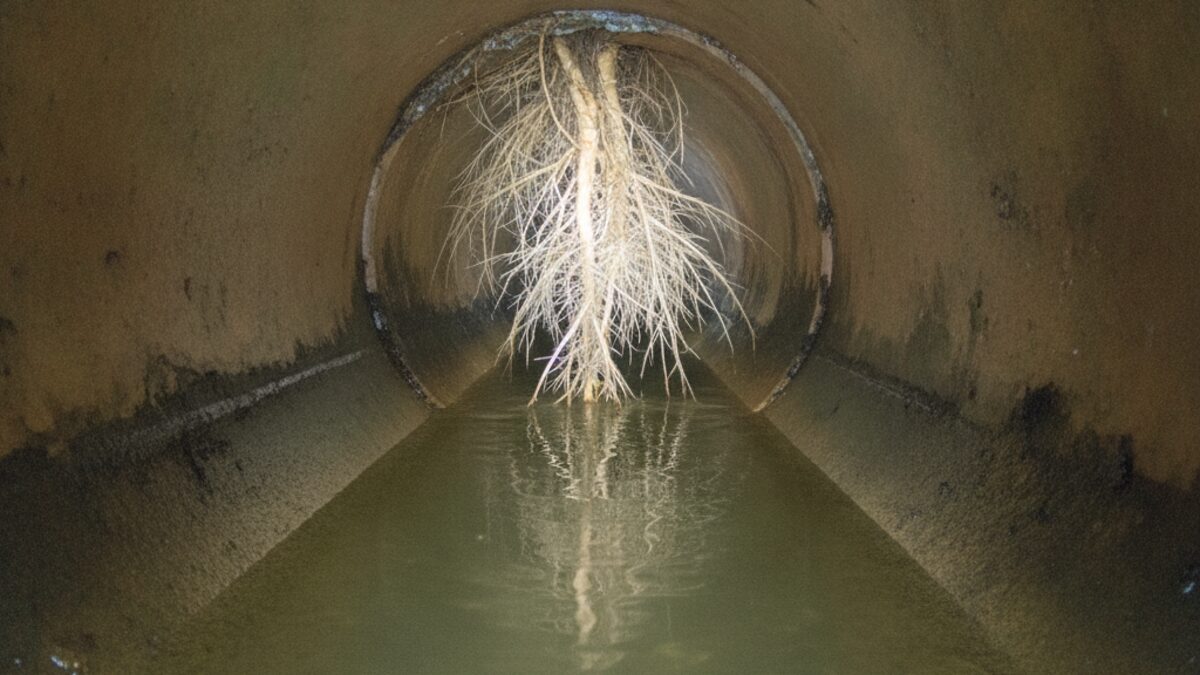
Root intrusion. Roots find joints and gaps, and once inside they keep growing. On established streets with mature trees this is the most common finding by a distance. Cutting them clears the line; it does not stop them returning, which is why the camera matters — it shows whether you have a maintenance situation or a repair one.
Bellies. A section that has settled below the run either side, so water and solids sit in it rather than draining through. A belly is why some lines clog repeatedly no matter how often they are cleared. Jetting empties it; it does not remove the dip.
Cracks, offsets and separated joints. Older laterals move with the ground. Joints open, sections shift out of line, and each offset becomes somewhere material catches.
Pipe material. This is often the most useful single output. Clay, cast iron, Orangeburg and modern PVC have very different outlooks, and knowing what is actually down there changes how you plan. Older Hollister properties turn up a mix.
Scale and buildup. Decades of accumulation narrowing the bore, which is a different problem from a blockage and responds to different work.
When It Is Worth Doing
Before buying an older property. Cheap relative to the repair, and it is the one finding that materially changes a negotiation.
After repeat blockages. If a line has been cleared more than once, stop clearing it blind. Something is causing it, and the camera identifies whether it is roots, a belly or a defect.
Before a remodel or an addition, especially anything that will put more load on the line or build over its route.
When buying a property with large mature trees near the run. Not a reason to walk away, but a reason to know.
Before paying for a repair quote you cannot evaluate. Any proposal to dig should be preceded by footage showing why.
What It Does Not Do
Worth being straight about the limits.
A camera shows condition, not a guarantee. It cannot see through standing water particularly well, which is one reason a line is best scoped after it has drained rather than while backed up. It does not assess the municipal main beyond the property. And it does not price the repair by itself — locating depth and route is a separate step, though usually done at the same visit.
It also cannot tell you what a line will do in five years. It tells you what is there now, which is considerably more than you knew before.
Keep the Footage
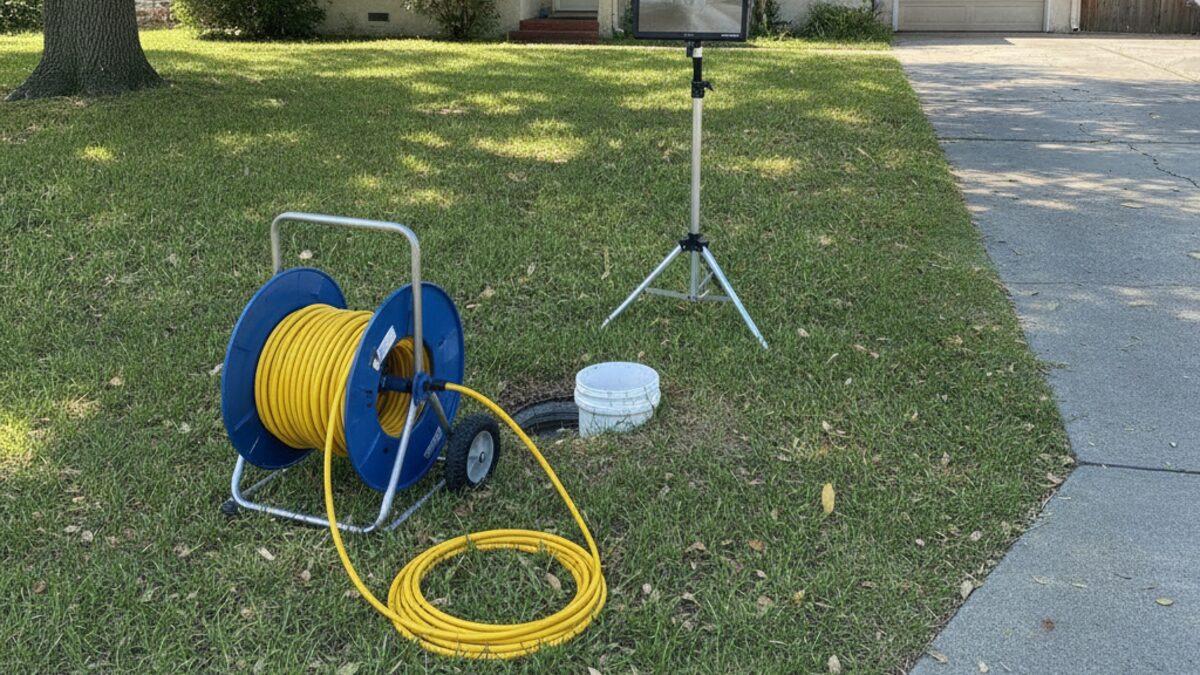
Ask for a copy, and keep it.
It gives you a baseline. If the line is scoped again in three years, the comparison tells you whether something is progressing or has been stable all along — and that difference decides between monitoring and spending.
It is also the document that makes a repair quote reviewable by someone else.
What Happens Next
If the camera finds roots and the pipe is otherwise sound, the answer is usually clearing and a maintenance interval — our piece on hydro jetting versus snaking covers the difference between the two approaches.
If it finds a belly, a collapse or widespread deterioration, that is a repair conversation, and the footage is what makes it a specific one rather than a guess.
DAE Plumbing provides sewer camera inspection across Hollister, Gilroy, Morgan Hill and the Central Coast, alongside hydro jetting where a line needs clearing. Licensed and insured, CA Lic. #1047507, free estimates.
Call (831) 801-1079, or (408) 728-2856 for Gilroy, Morgan Hill and San Jose.